वाक् अन्वेषणम् • Corpus Overview
Aggregate Analysis across 148 Utterances

Summary Statistics

148
Total Utterances
TTS: 148
Human: 0
37
Unique Varnas
3 pri
8 sec
6 vya
1
TTS Engines
ggl
2
Scripts
ಅ, అ

Gender Distribution: Female: 74, Male: 74

Acoustic Features Summary

What each measurement means:
  • F1 (First Formant, Hz): Primarily indicates vowel height (vertical tongue position). High F1 = open vowels (अ "a", आ "ā"); Low F1 = closed vowels (इ "i", उ "u"). Mathematically, the lowest resonance frequency of the vocal tract.
  • F2 (Second Formant, Hz): Primarily indicates vowel backness (front-back tongue position). High F2 = front vowels (इ "i", ई "ī"); Low F2 = back vowels (उ "u", ऊ "ū"). The second-lowest resonance frequency.
  • F3 (Third Formant, Hz): Indicates finer details of articulation and consonant-vowel transitions. Higher values typically found in fricatives and consonants. The third-lowest resonance frequency of the vocal tract.
  • Pitch (F0, Hz): Fundamental frequency—the rate of vocal cord vibration. Higher pitch = faster vibration (typically female speakers); Lower pitch = slower vibration (typically male speakers). Ranges ~80-250 Hz for adult speakers.
  • Duration (milliseconds): Length of the phoneme. Vowels typically 100-300ms; consonants typically 50-200ms depending on manner of articulation.
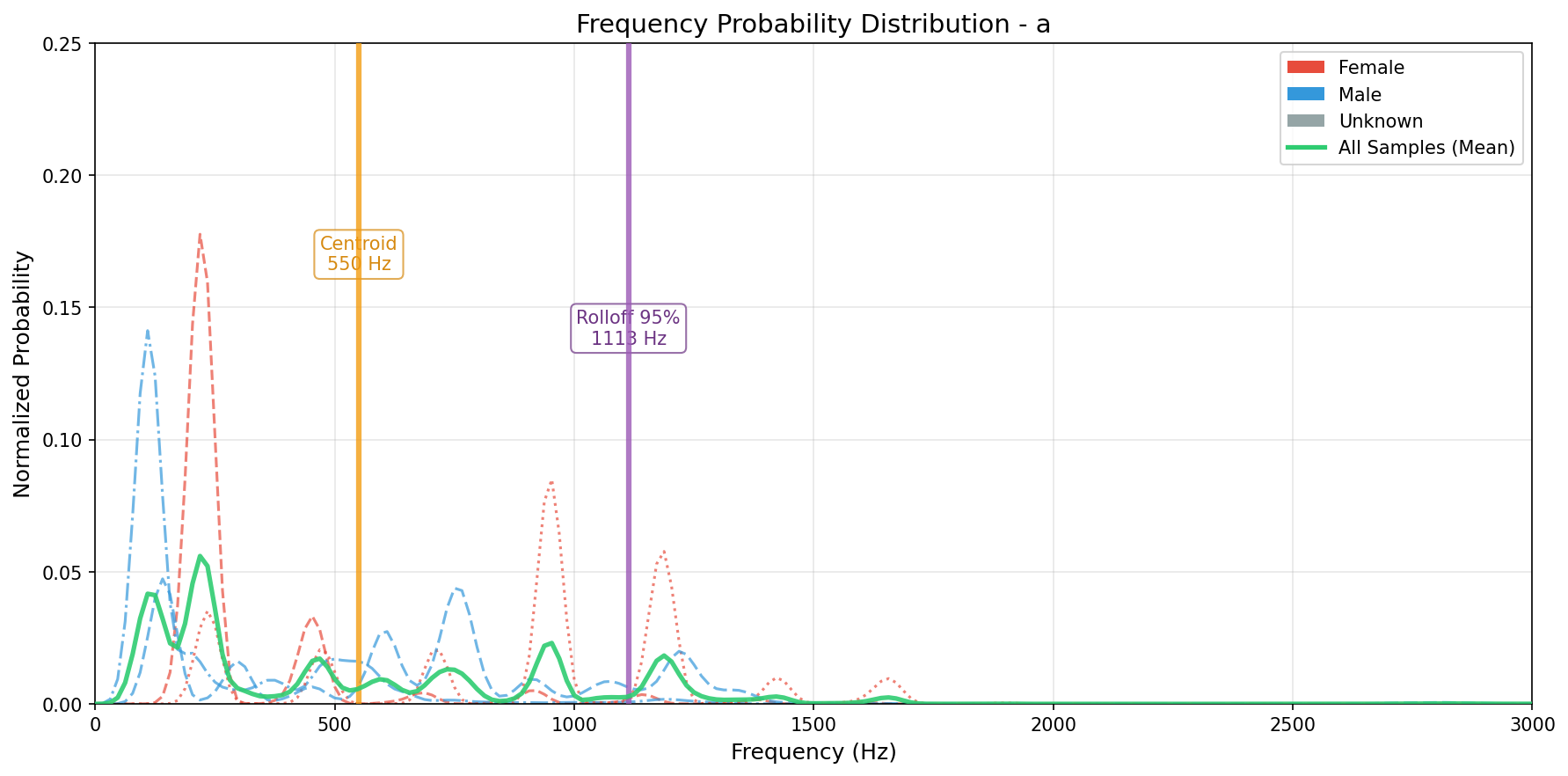
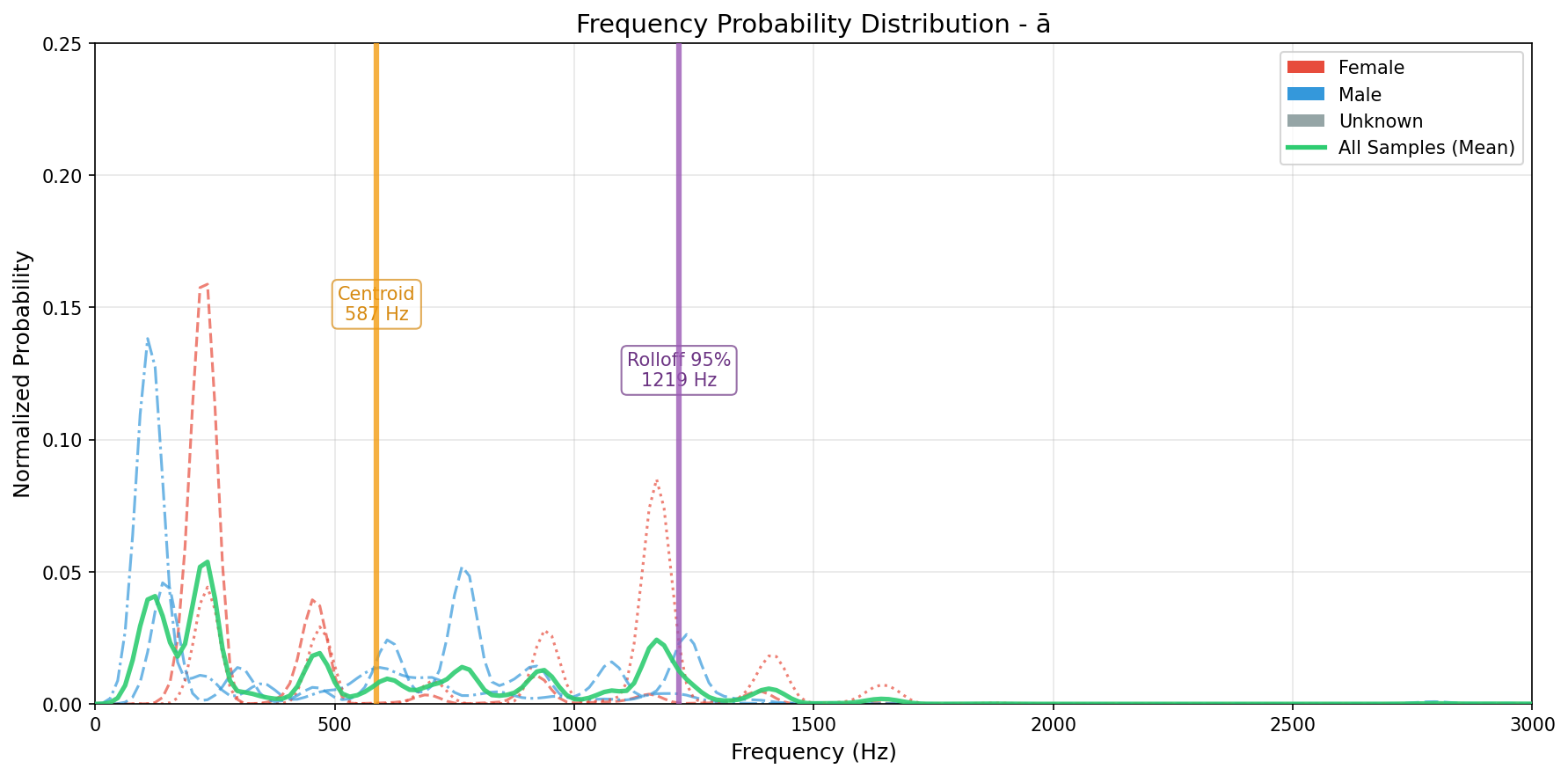
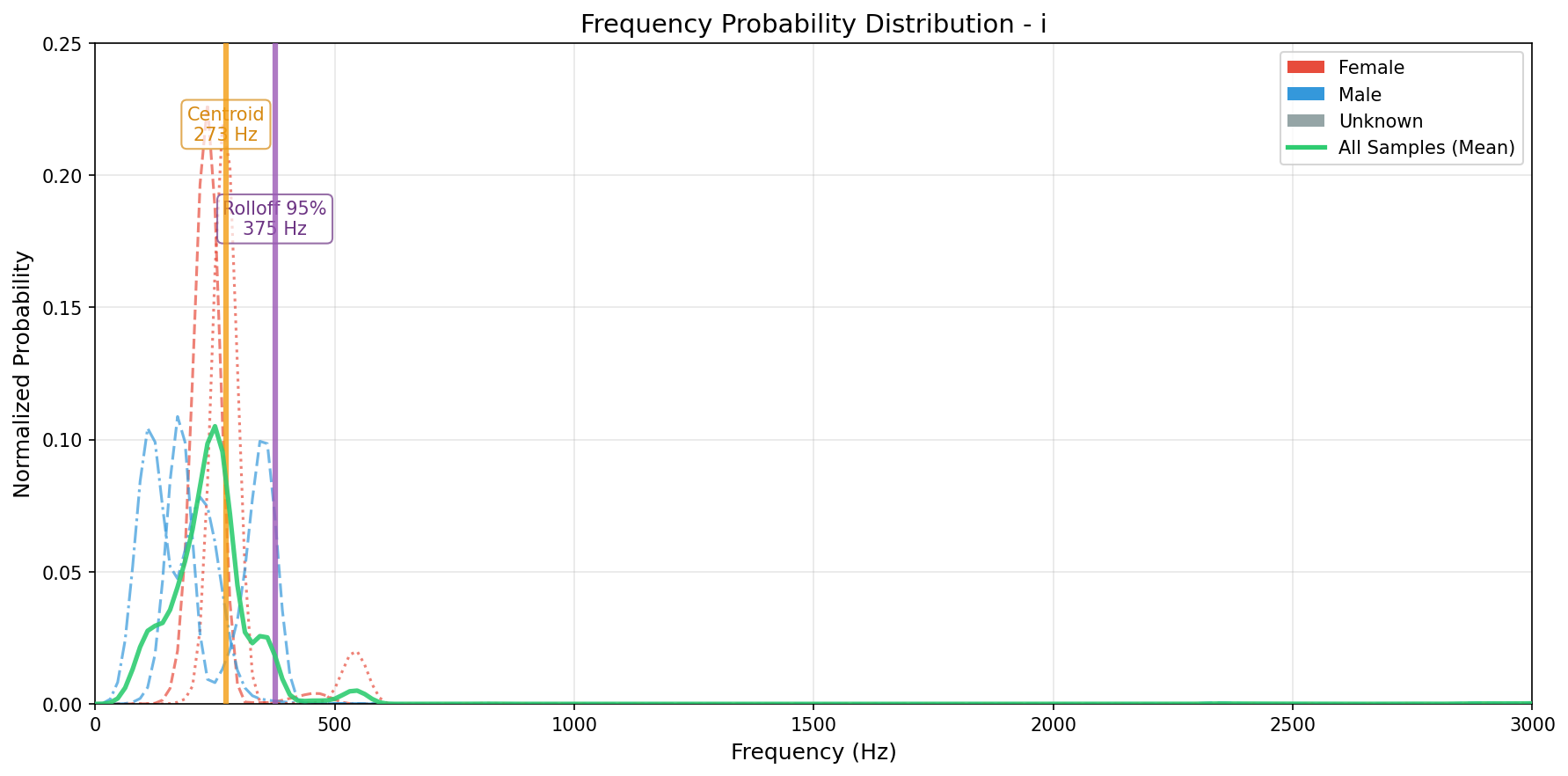
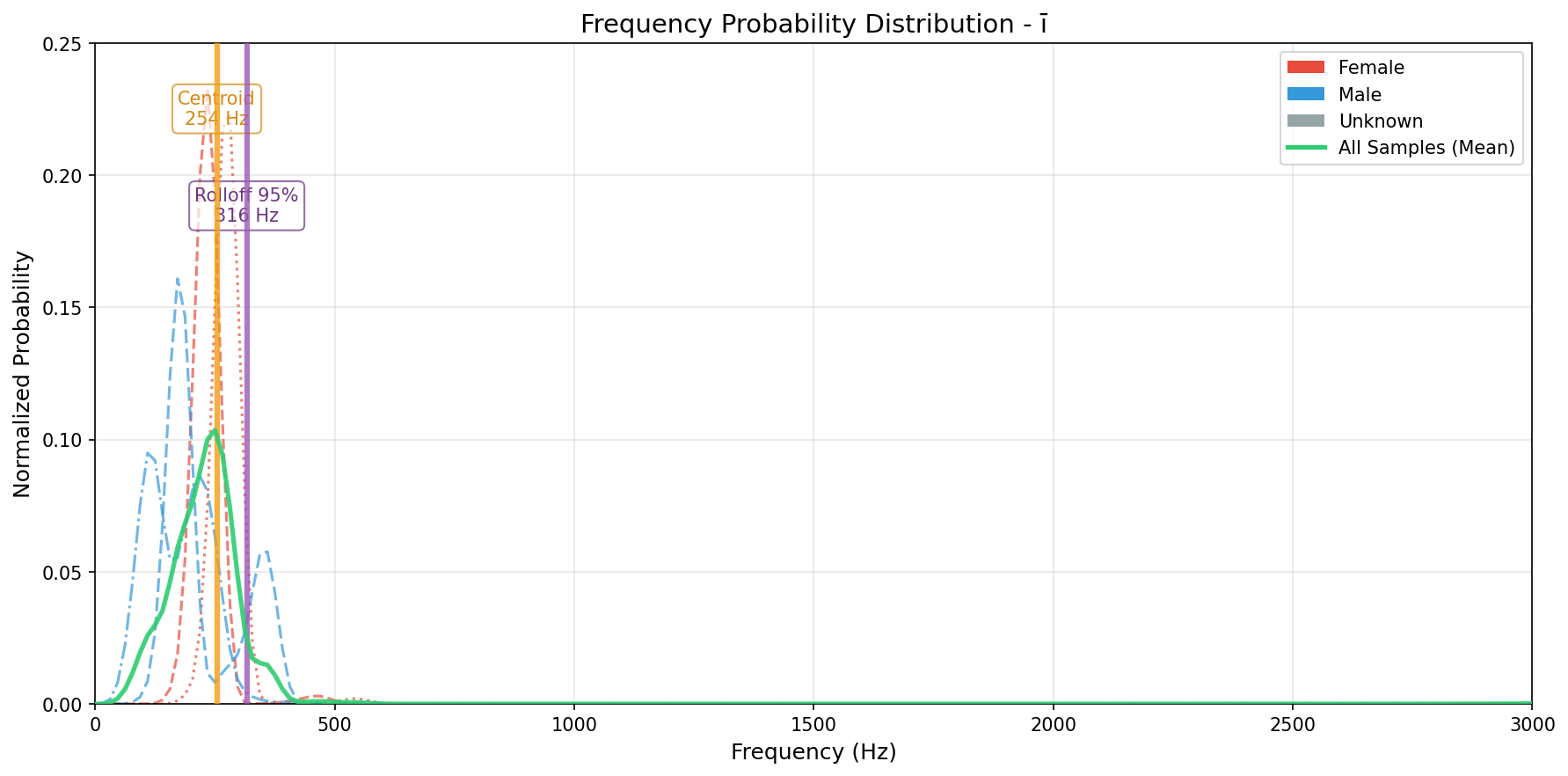
  • Spectral Centroid (Hz): Weighted mean frequency of the spectrum—indicates the "brightness" or "center of mass" of the sound. Higher centroid = brighter sound with more high-frequency energy (typical for fricatives like सु); Lower centroid = duller sound dominated by low frequencies (typical for vowels like ऊ). Ranges ~1000-4000 Hz for speech.
  • Spectral Rolloff 95% (Hz): The frequency threshold containing 95% of the total sound energy. Marks where most of the acoustic energy is concentrated. Lower rolloff = energy concentrated in lower frequencies; Higher rolloff = energy spread across higher frequencies. Useful for distinguishing vowels from consonants.

Color Coding: Blue gradients show relative values within formant/spectral columns (lighter = lower, darker = higher); Red gradients show relative pitch values. This helps spot patterns across phonemes.

Devanagari chars (क), Devanagari with . for compounds (क.), or IAST/transliteration (a, i, ka)
Varna Count F1 Mean F1 Std F2 Mean F2 Std F3 Mean F3 Std Pitch Mean Pitch Std Duration (ms) Centroid Mean Centroid Std Rolloff Mean Rolloff Std
अ (a) 4 808 143 1789 130 3213 165 169 54 431 550 277 1114 377
आ (ā) 4 856 147 1638 86 3222 179 169 53 523 588 253 1219 194
इ (i) 4 517 65 2541 171 3245 165 180 60 466 273 53 375 109
ई (ī) 4 468 64 2579 156 3291 133 179 60 554 254 37 316 39
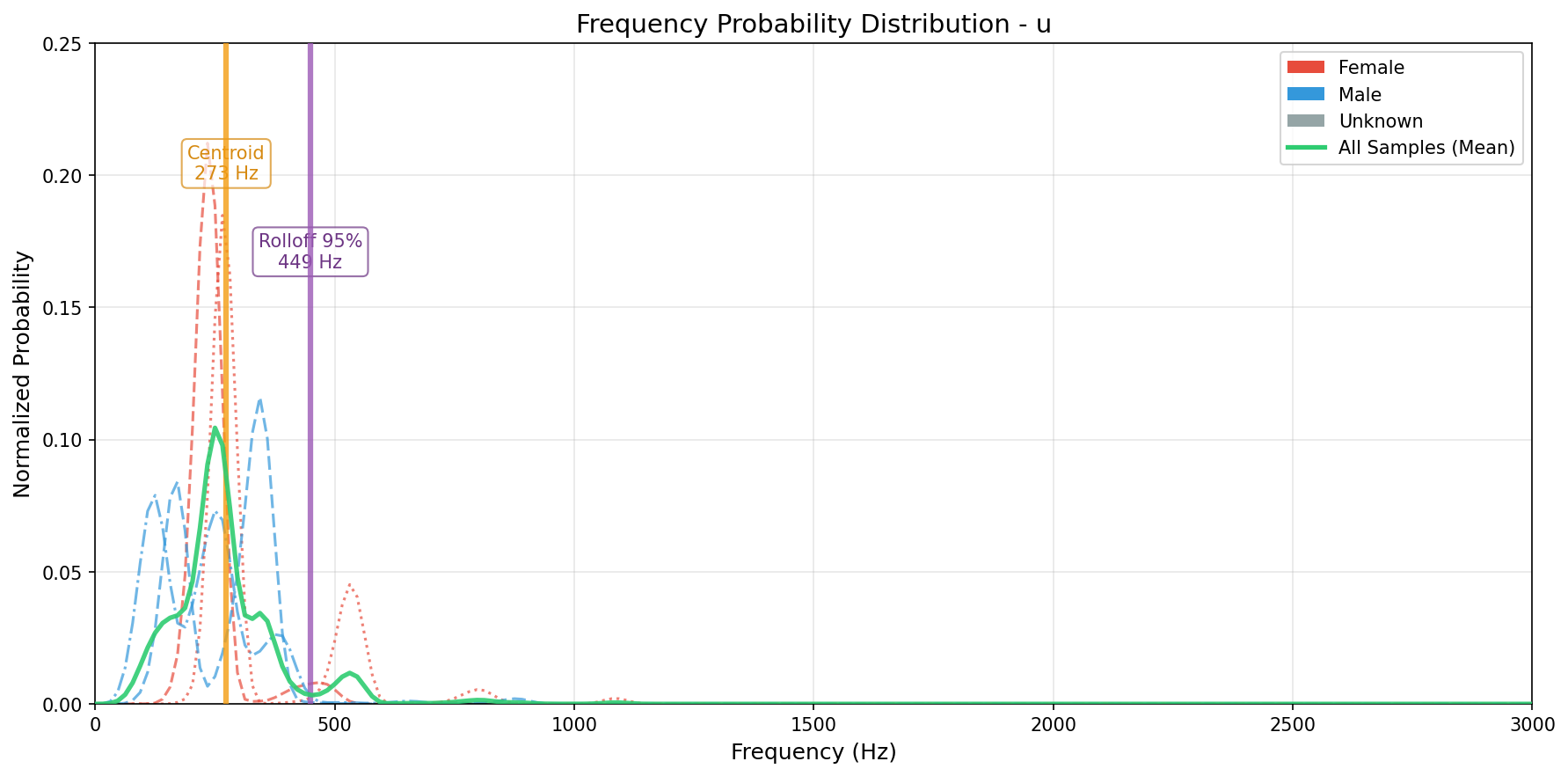
उ (u) 4 613 66 1407 71 3129 131 179 59 478 274 46 449 75

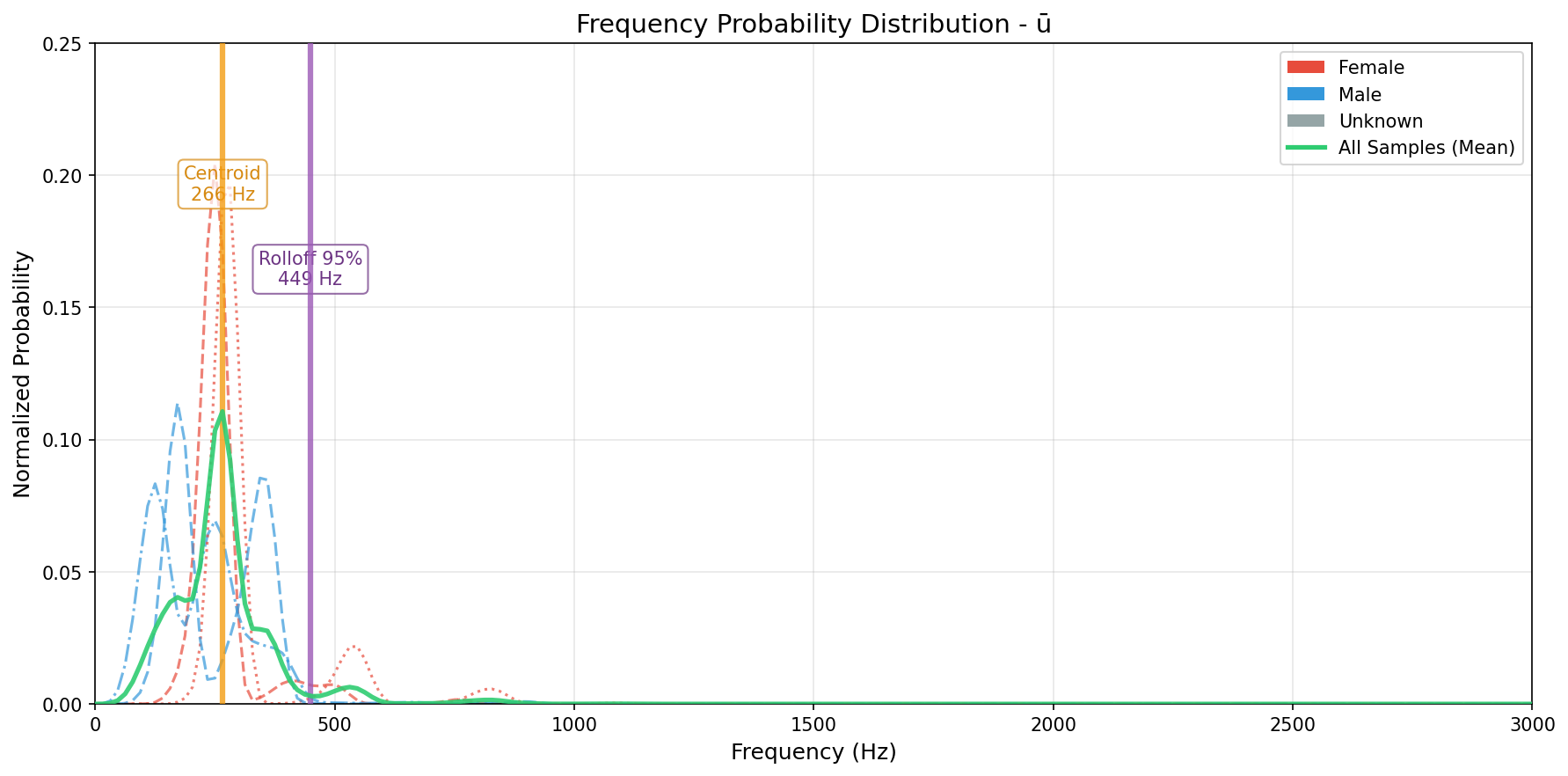
ऊ (ū) 4 529 62 1314 140 3046 182 183 60 546 266 39 450 77
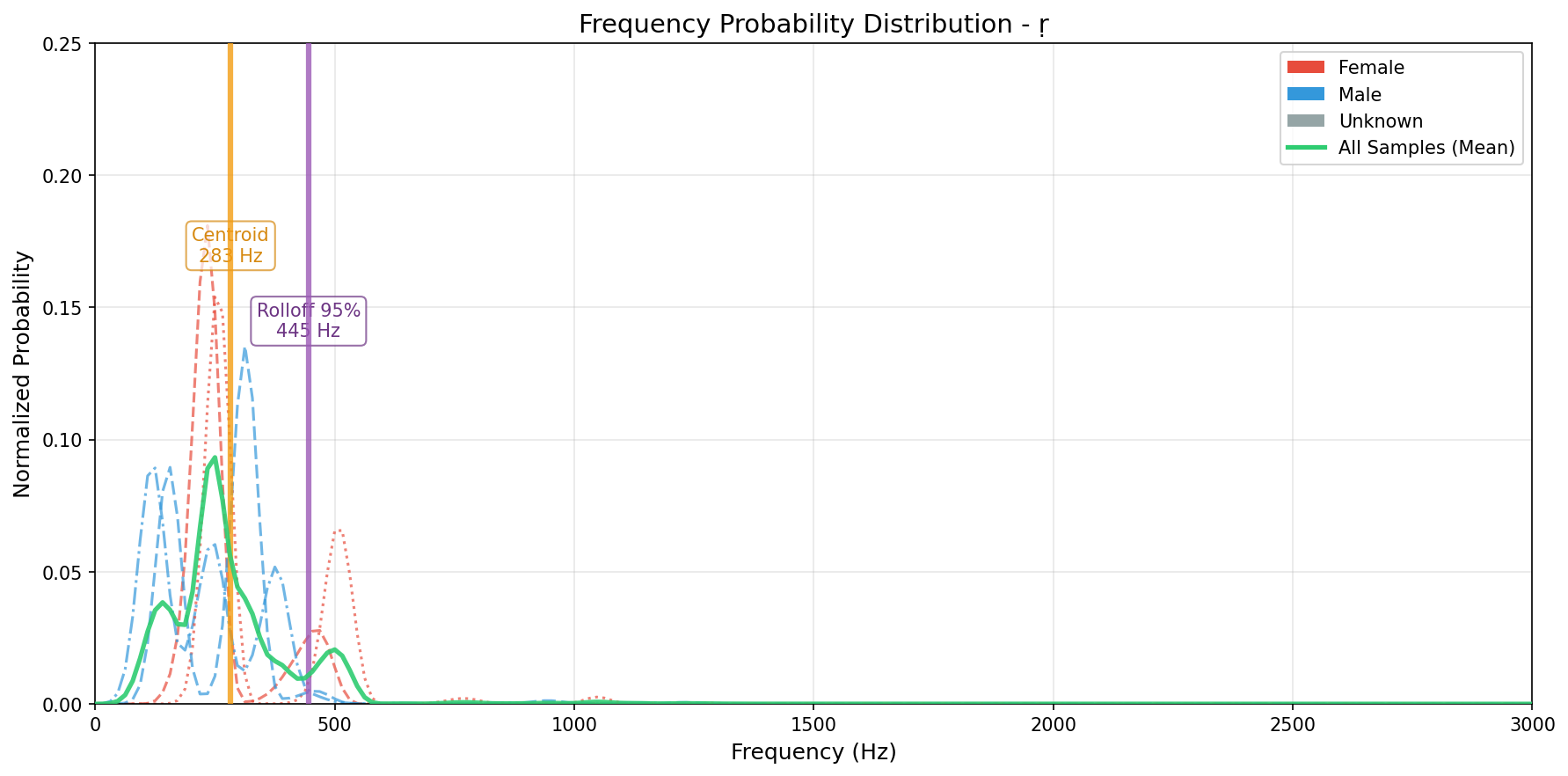
ऋ (ṛ) 4 550 46 1486 94 2963 115 173 56 542 282 44 445 71
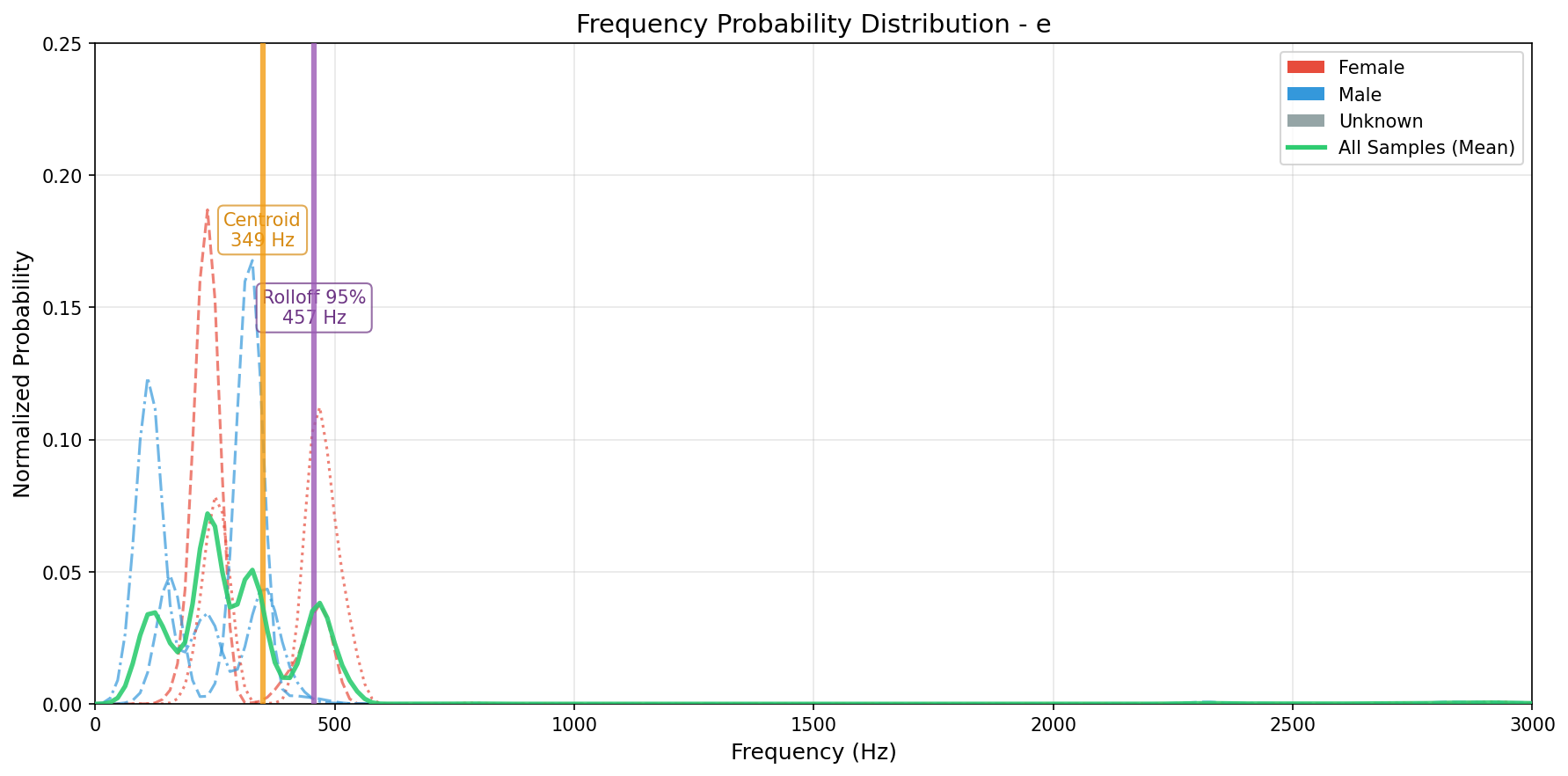
ए (e) 4 511 43 2559 200 3244 180 174 57 565 349 89 457 63
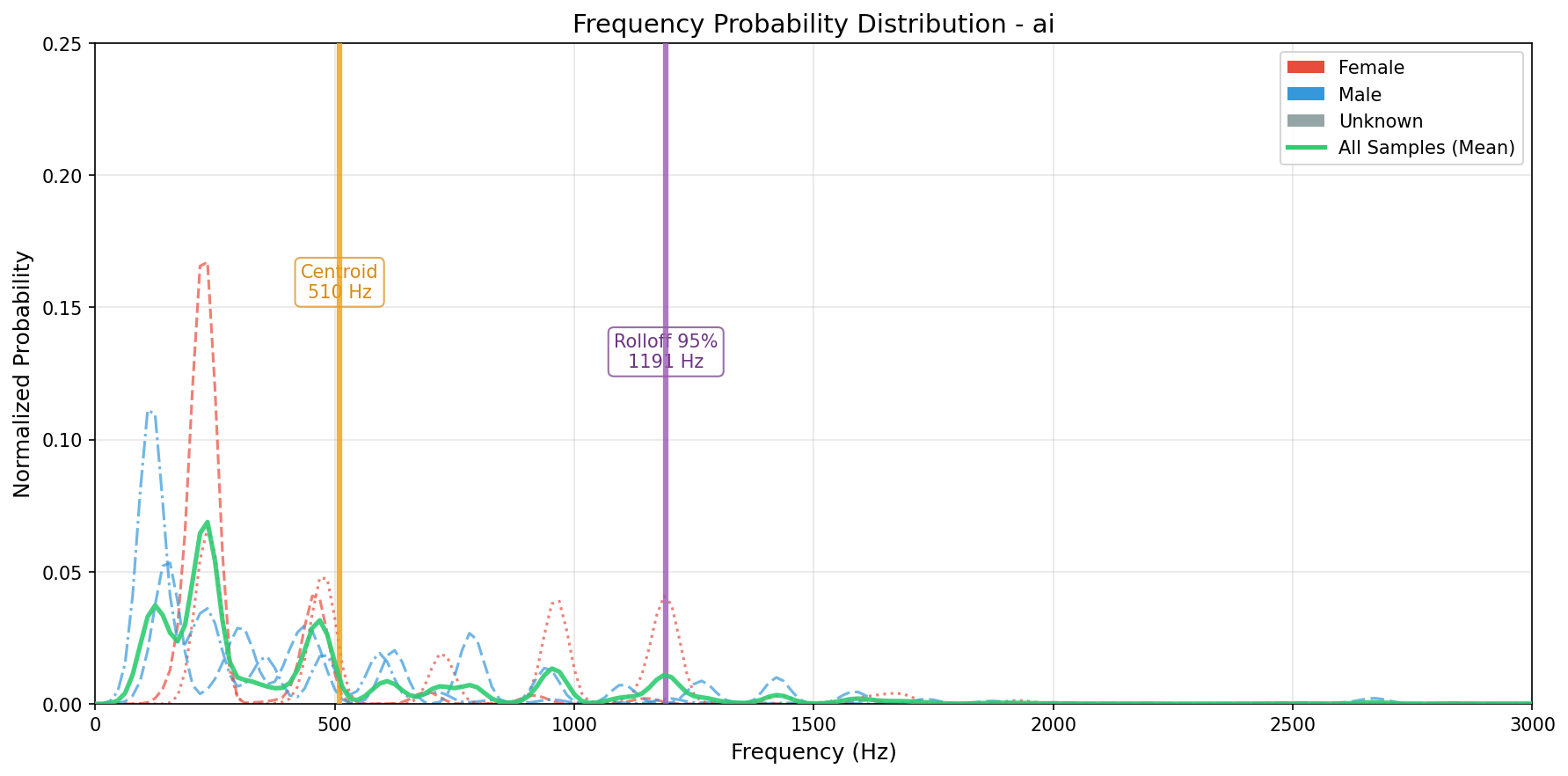
ऐ (ai) 4 593 102 2303 158 3131 143 167 52 558 510 206 1191 483
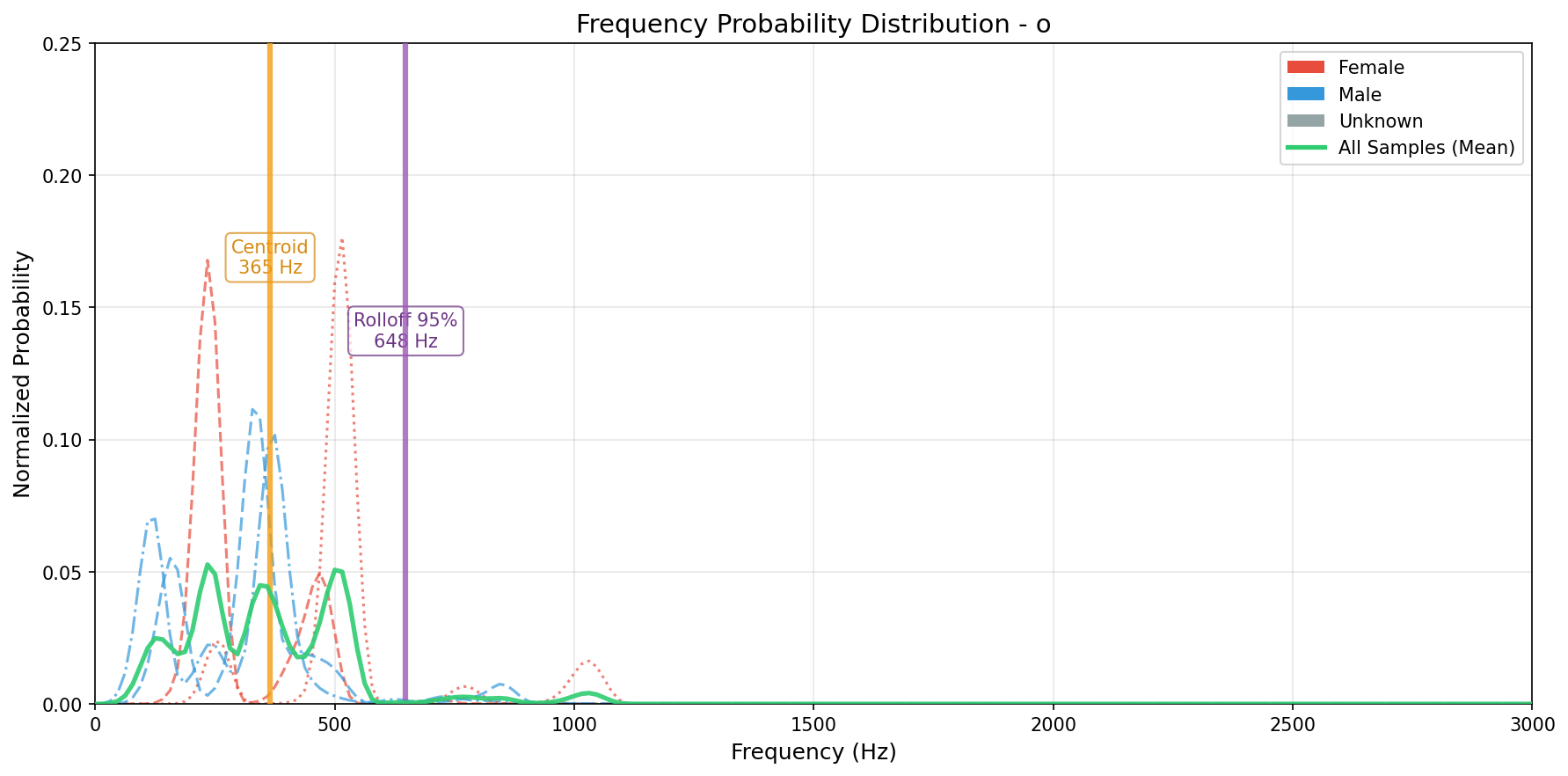
ओ (o) 4 582 66 1261 98 3093 138 175 56 540 365 102 648 221
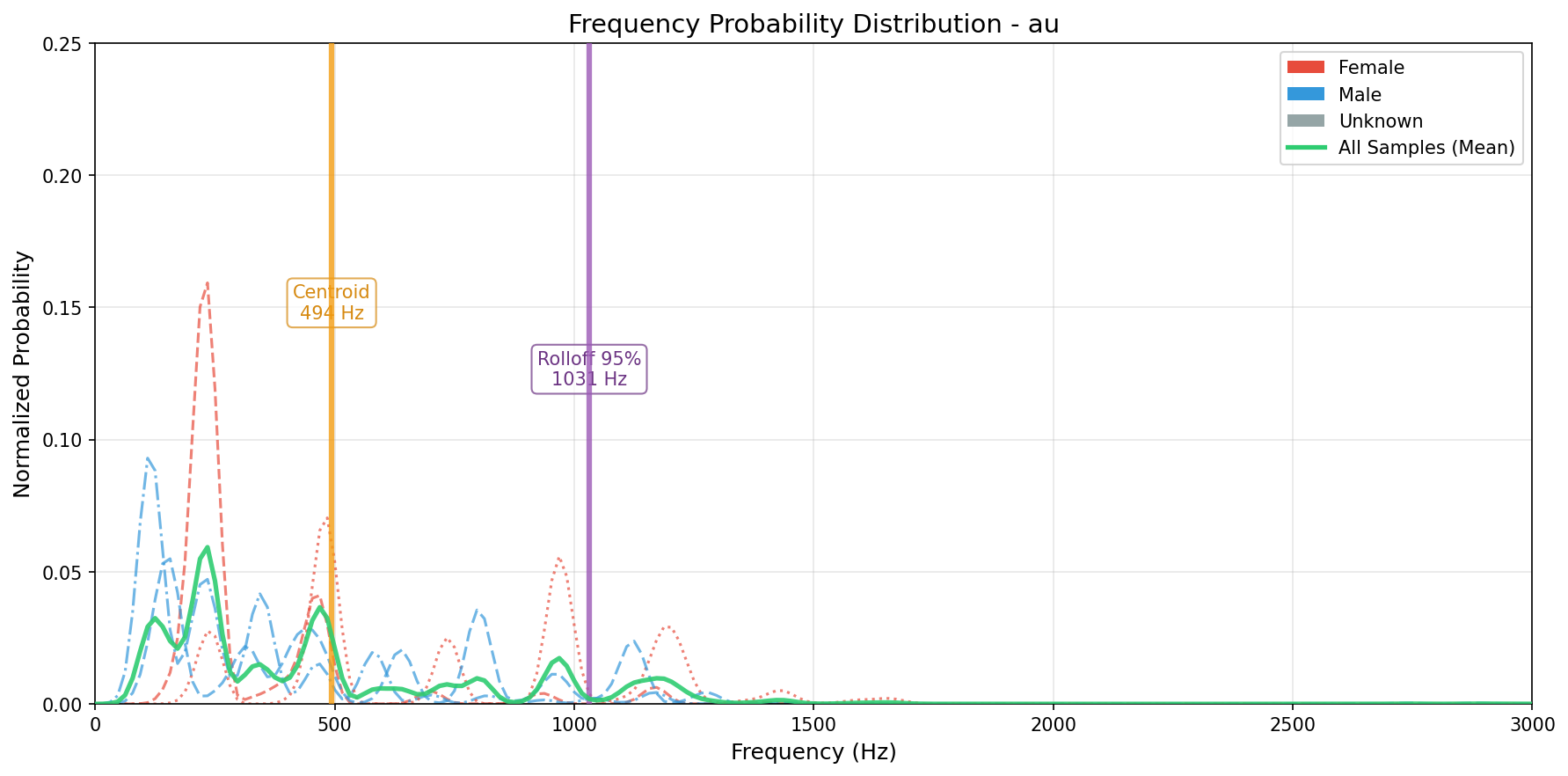
औ (au) 4 636 102 1361 102 3022 70 167 51 560 494 195 1031 225
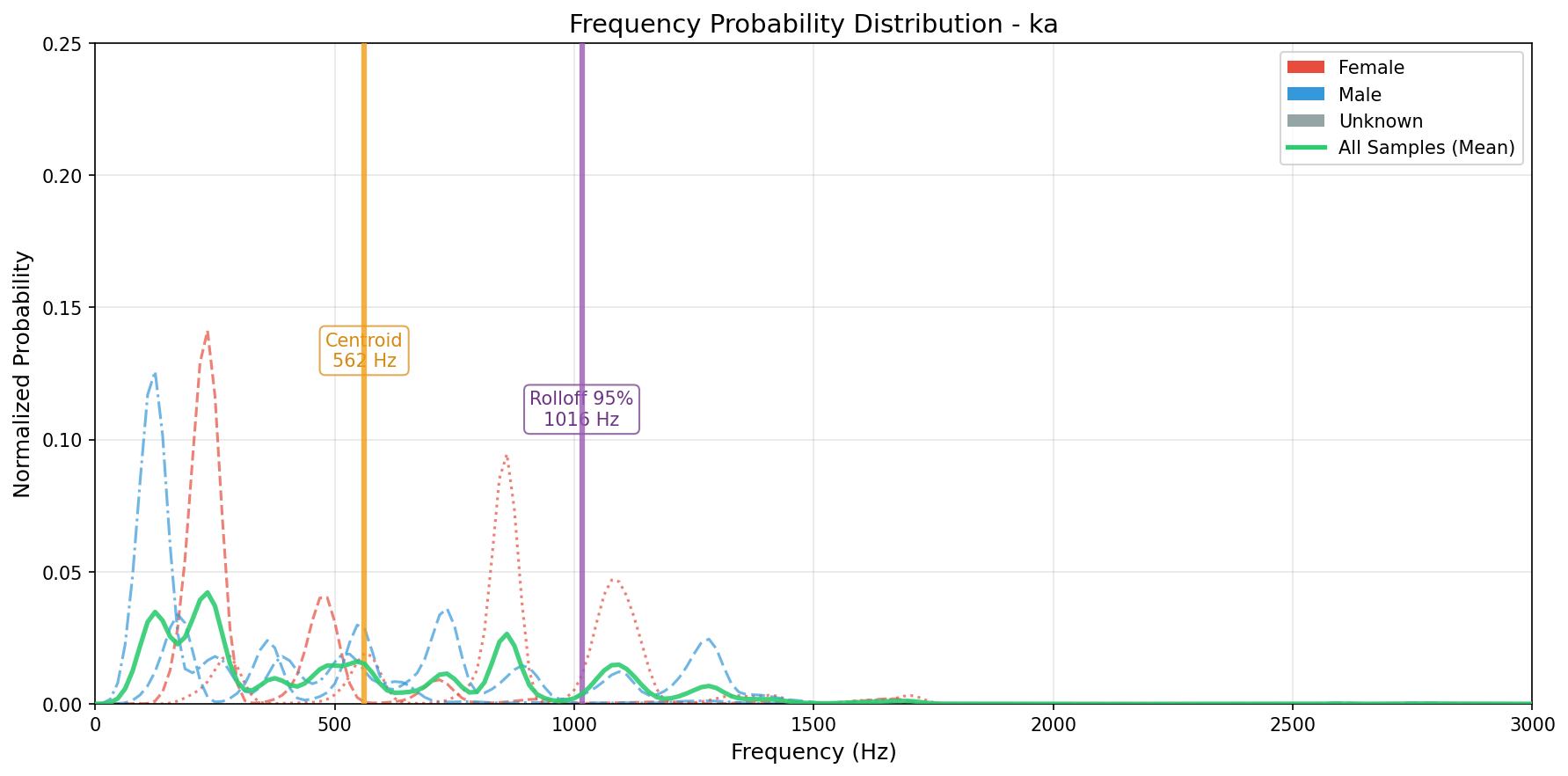
क (ka) 4 865 104 1811 143 3149 87 183 58 515 562 260 1016 323
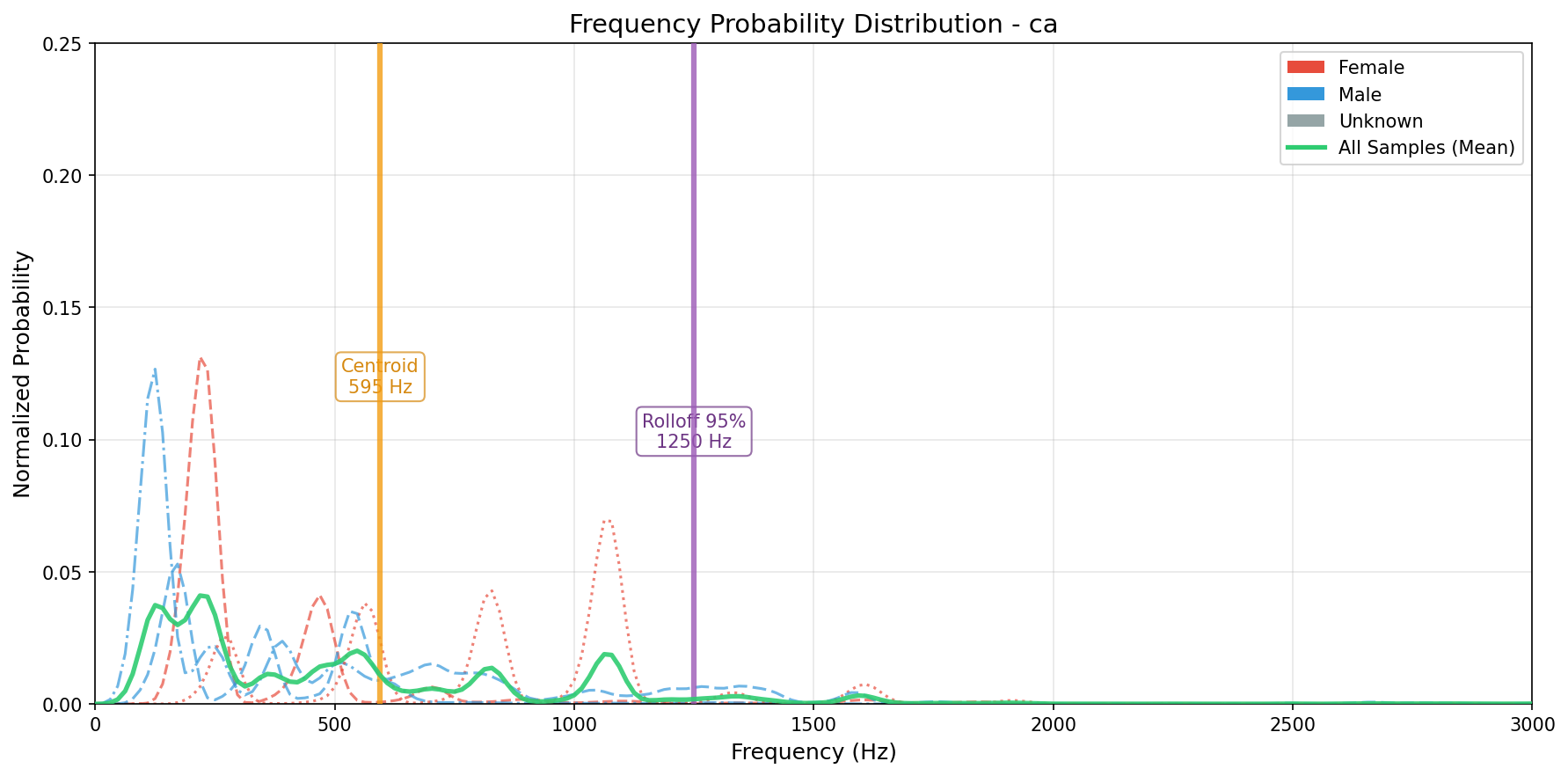
च (ca) 4 931 88 1970 60 3214 78 179 57 531 595 231 1250 390
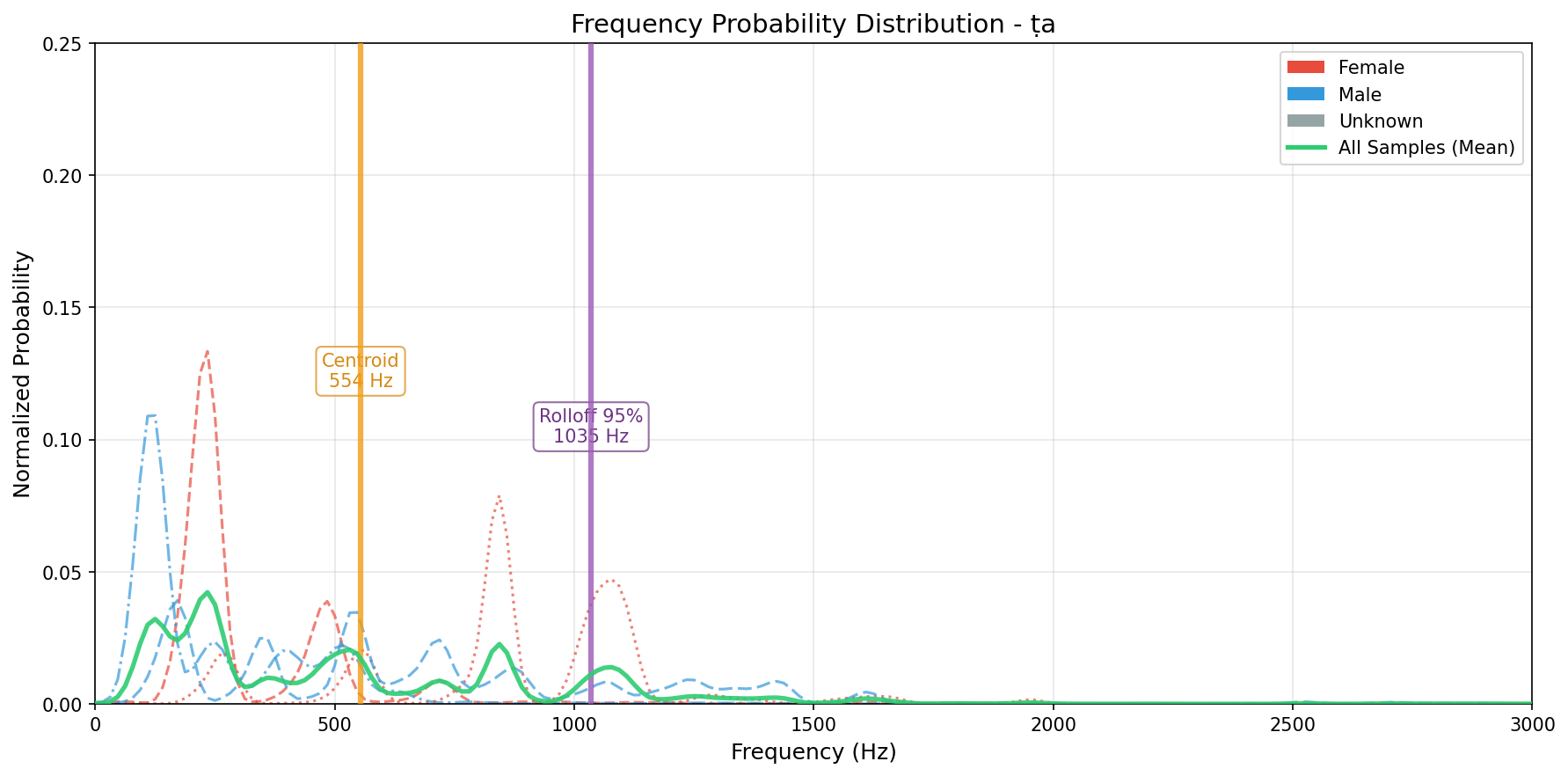
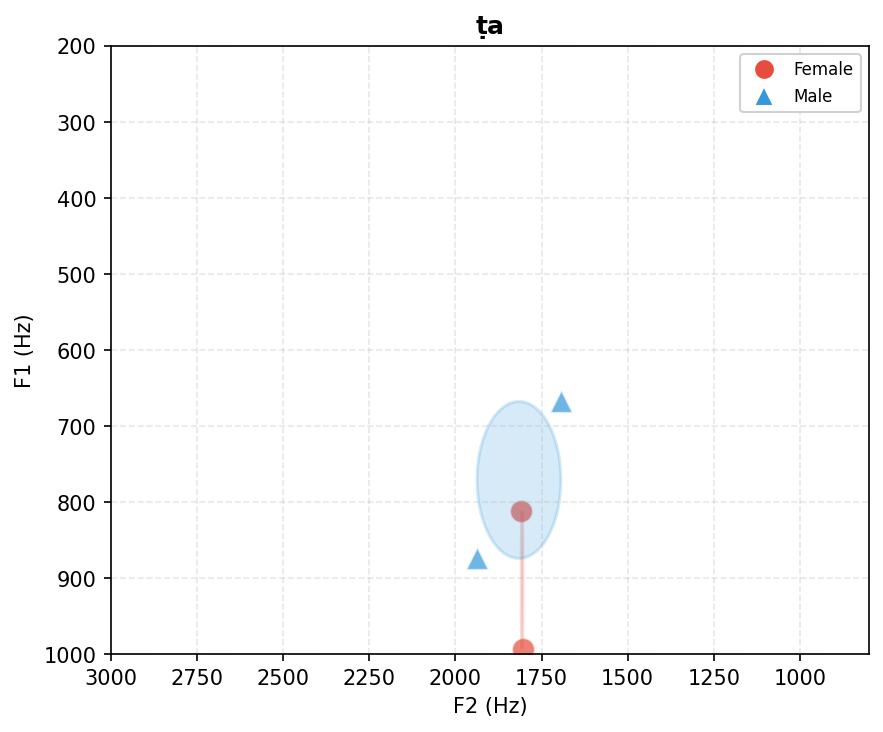
ट (ṭa) 4 837 117 1811 86 3126 88 180 56 503 554 258 1035 384
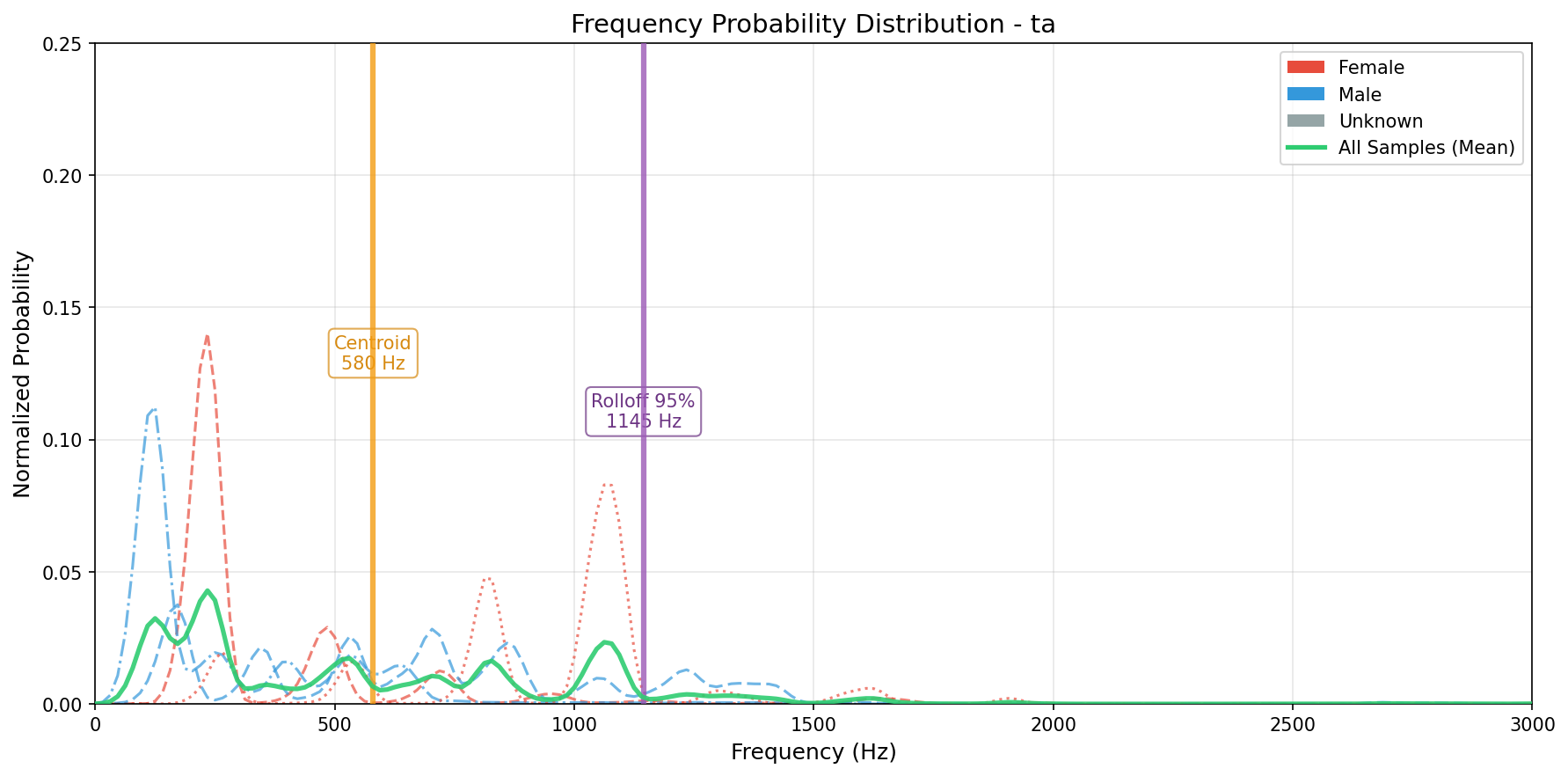
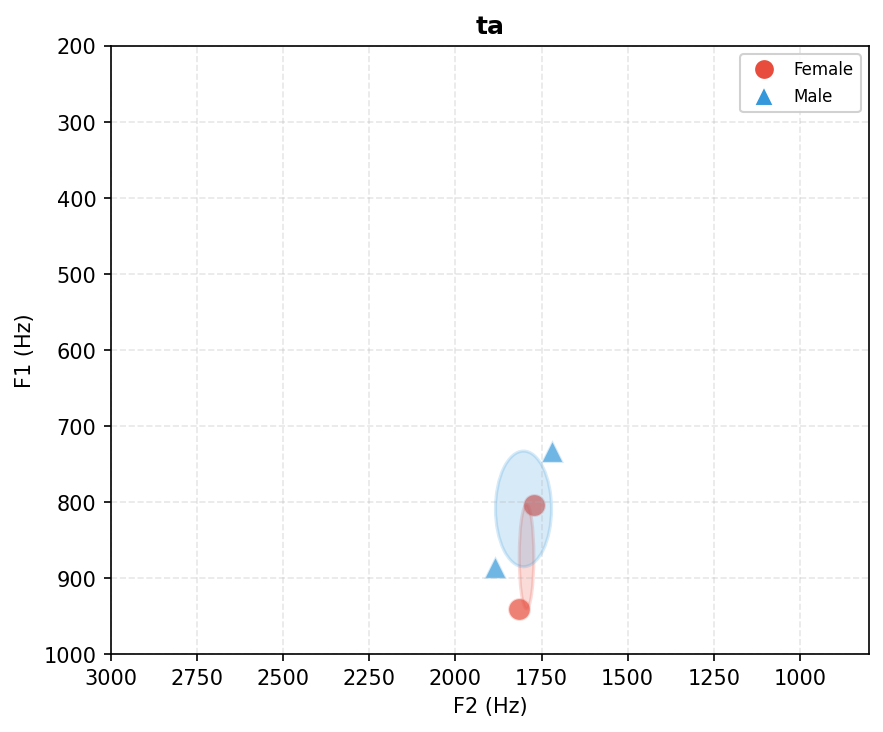
त (ta) 4 841 79 1798 60 3129 99 183 57 503 580 265 1144 355
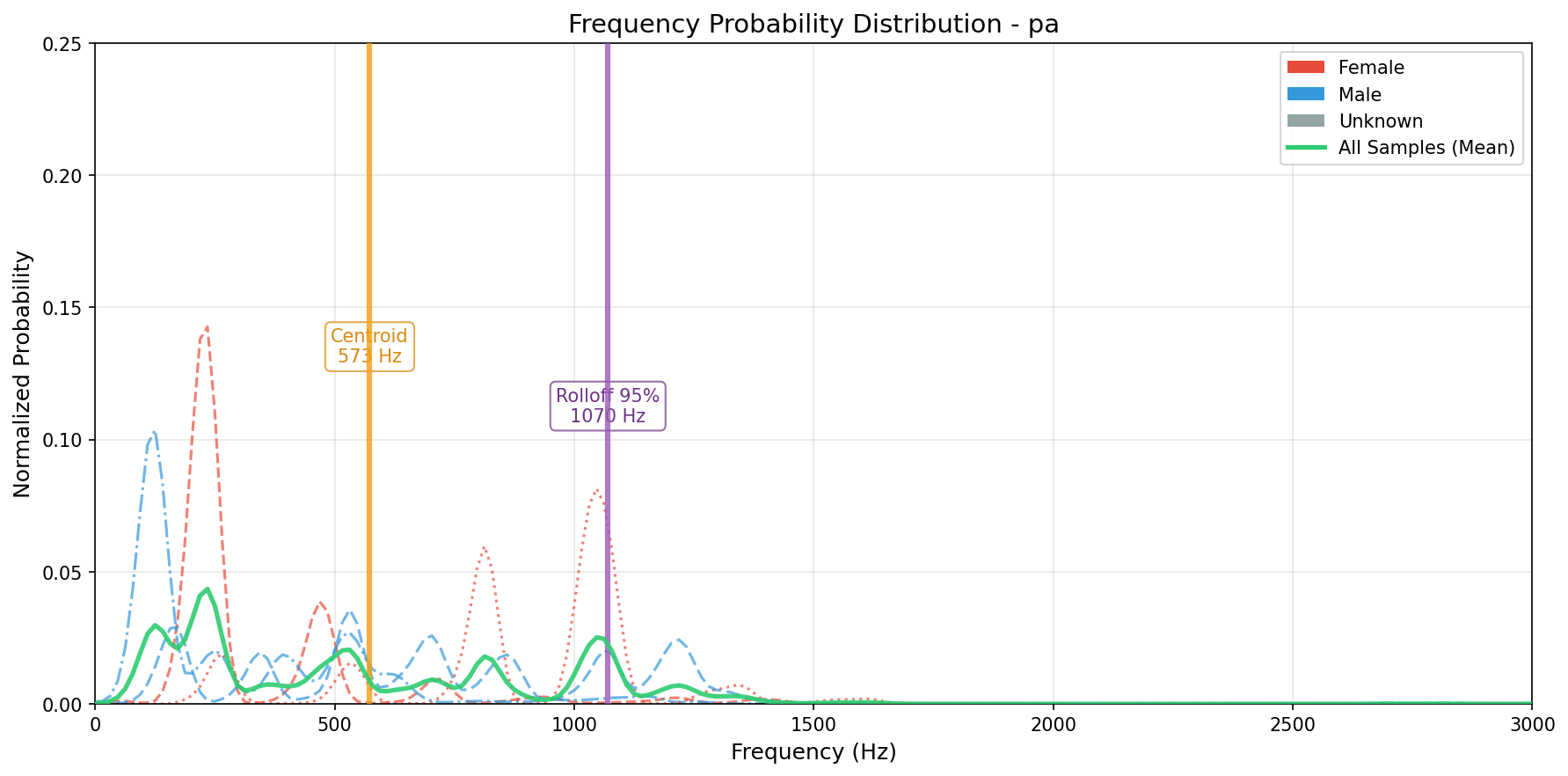
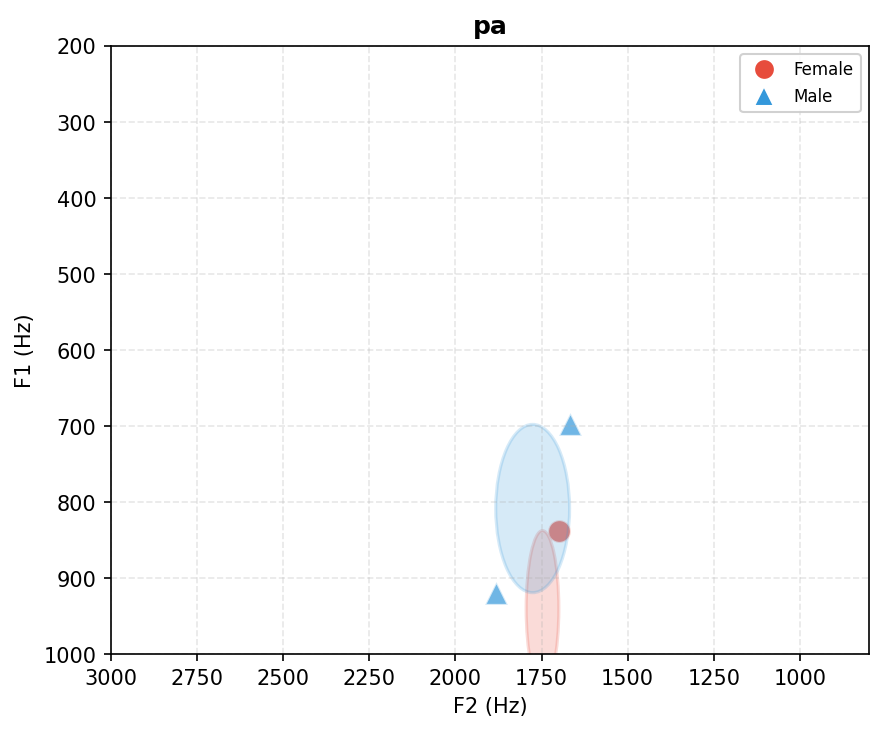
प (pa) 4 874 125 1762 84 3172 110 180 55 499 573 252 1070 223
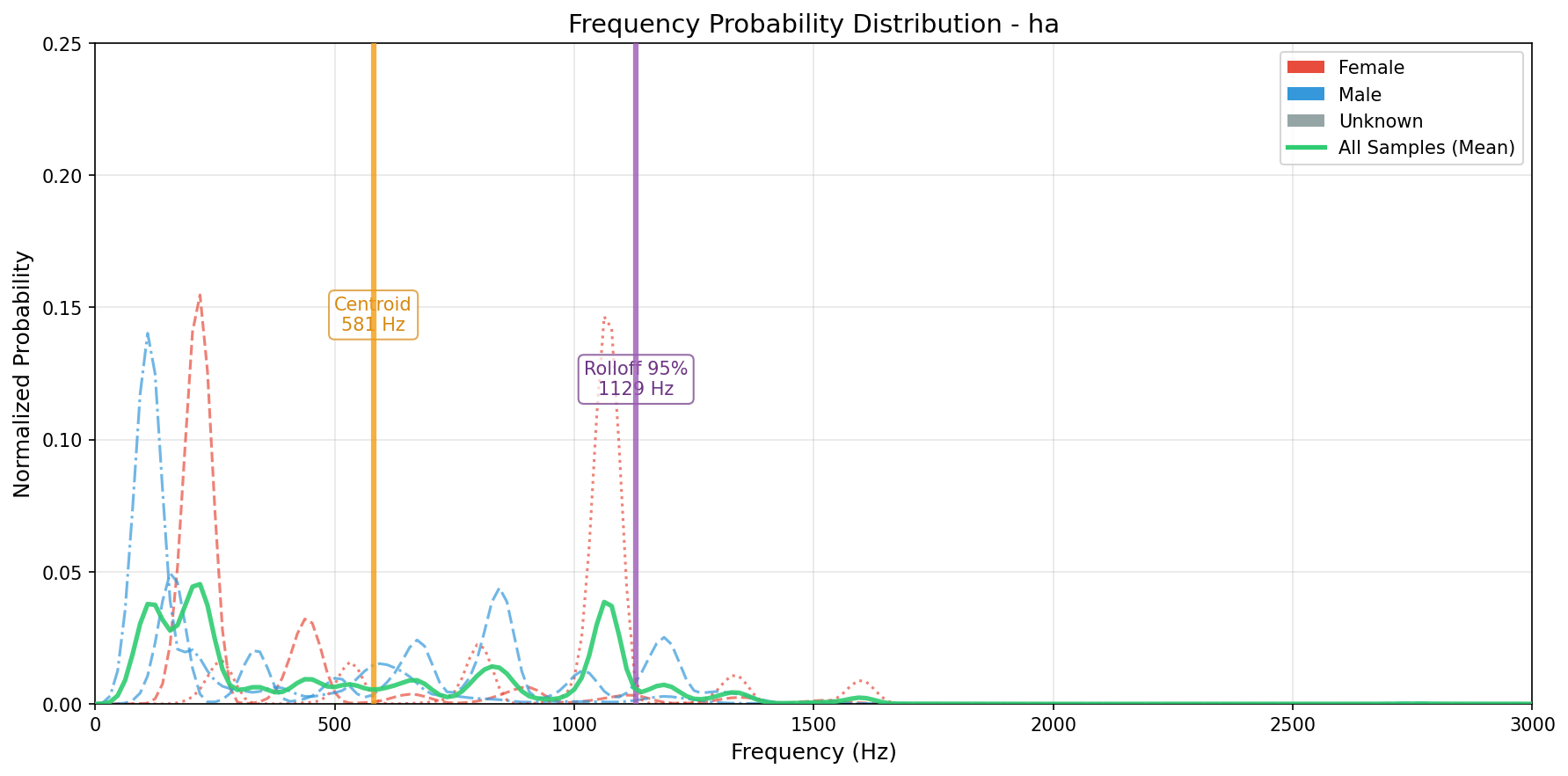
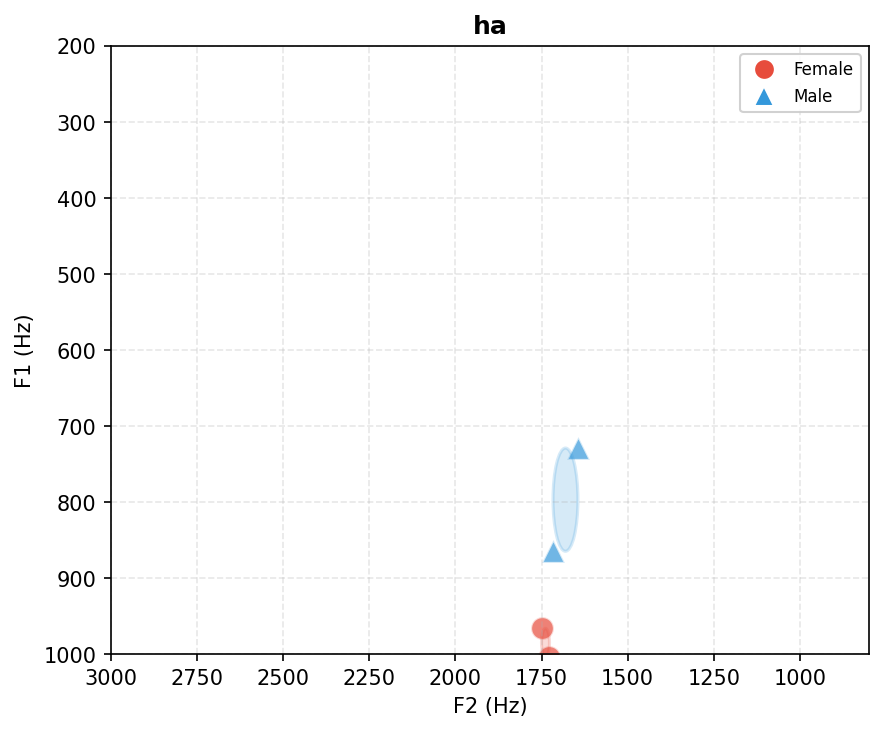
ह (ha) 4 891 106 1710 39 3131 86 176 55 526 581 287 1129 221

Tiled Comparison View

Quick visual comparison: Full-width cards showing Waveform and Pitch (left), Frequency Probability Distribution (right) for each varna. Uses the same filter as the Acoustic Features Summary table above.

Tip: Use the filter box above to show only specific varnas in this tiled view.

अ (a)
Waveform
Waveform: अ
Pitch
Pitch: अ
Frequency Probability Distribution
FPD: अ
आ (ā)
Waveform
Waveform: आ
Pitch
Pitch: आ
Frequency Probability Distribution
FPD: आ
इ (i)
Waveform
Waveform: इ
Pitch
Pitch: इ
Frequency Probability Distribution
FPD: इ
ई (ī)
Waveform
Waveform: ई
Pitch
Pitch: ई
Frequency Probability Distribution
FPD: ई
उ (u)
Waveform
Waveform: उ
Pitch
Pitch: उ
Frequency Probability Distribution
FPD: उ
ऊ (ū)
Waveform
Waveform: ऊ
Pitch
Pitch: ऊ
Frequency Probability Distribution
FPD: ऊ
ऋ (ṛ)
Waveform
Waveform: ऋ
Pitch
Pitch: ऋ
Frequency Probability Distribution
FPD: ऋ
ए (e)
Waveform
Waveform: ए
Pitch
Pitch: ए
Frequency Probability Distribution
FPD: ए
ऐ (ai)
Waveform
Waveform: ऐ
Pitch
Pitch: ऐ
Frequency Probability Distribution
FPD: ऐ
ओ (o)
Waveform
Waveform: ओ
Pitch
Pitch: ओ
Frequency Probability Distribution
FPD: ओ
औ (au)
Waveform
Waveform: औ
Pitch
Pitch: औ
Frequency Probability Distribution
FPD: औ
क (ka)
Waveform
Waveform: क
Pitch
Pitch: क
Frequency Probability Distribution
FPD: क
च (ca)
Waveform
Waveform: च
Pitch
Pitch: च
Frequency Probability Distribution
FPD: च
ट (ṭa)
Waveform
Waveform: ट
Pitch
Pitch: ट
Frequency Probability Distribution
FPD: ट
त (ta)
Waveform
Waveform: त
Pitch
Pitch: त
Frequency Probability Distribution
FPD: त
प (pa)
Waveform
Waveform: प
Pitch
Pitch: प
Frequency Probability Distribution
FPD: प
ह (ha)
Waveform
Waveform: ह
Pitch
Pitch: ह
Frequency Probability Distribution
FPD: ह

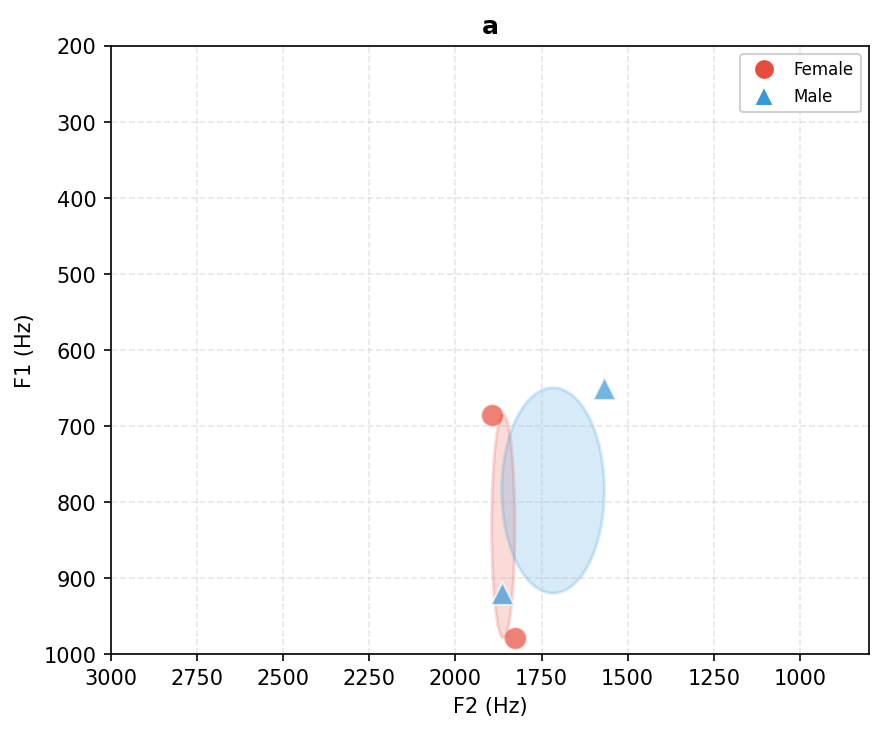
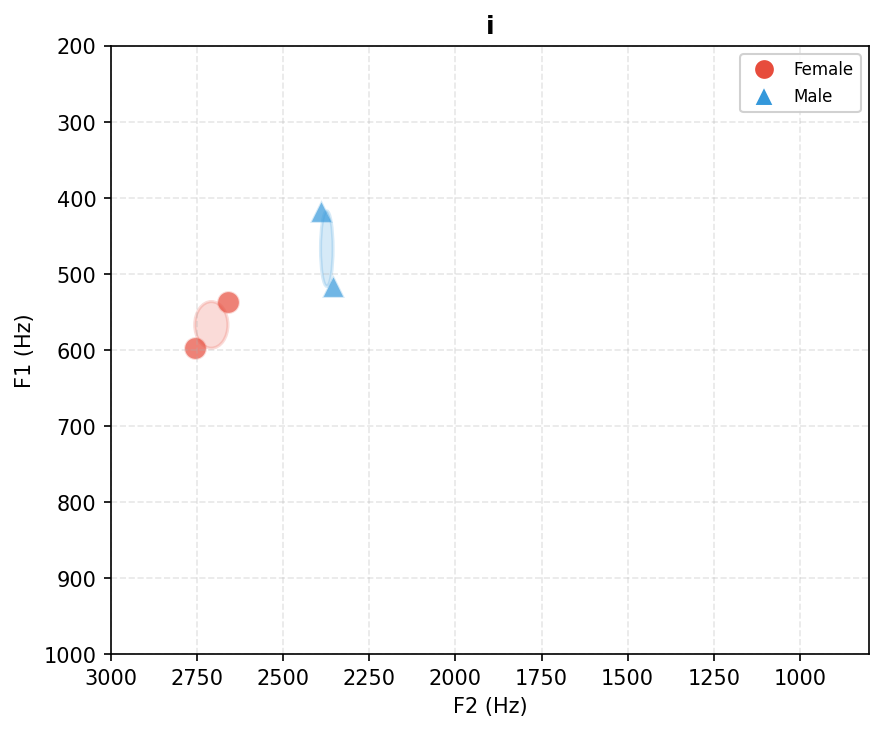
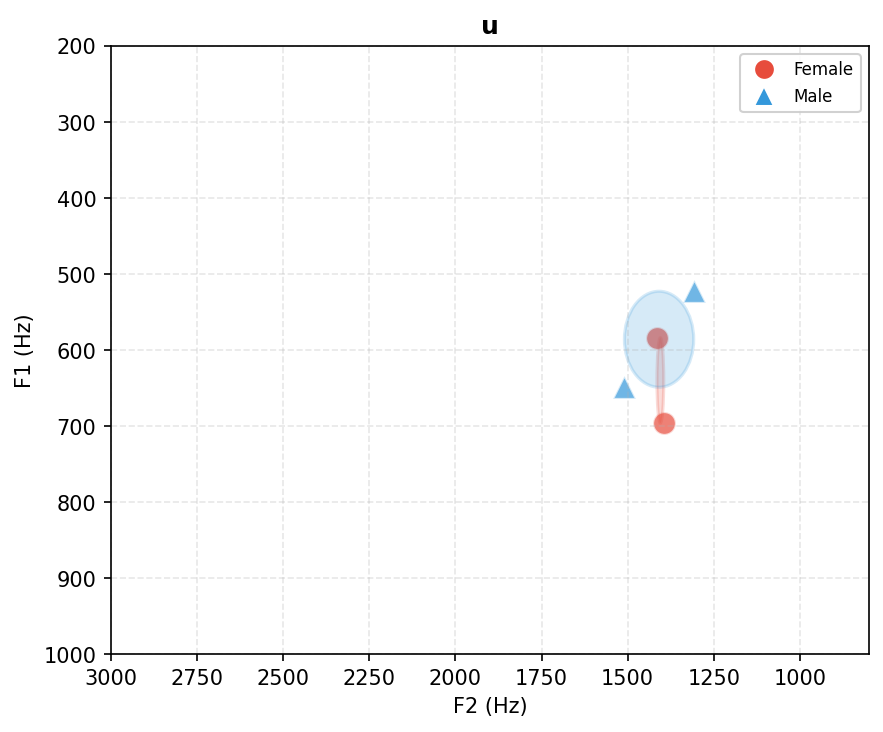
Primary Vowel Space: a, i, u

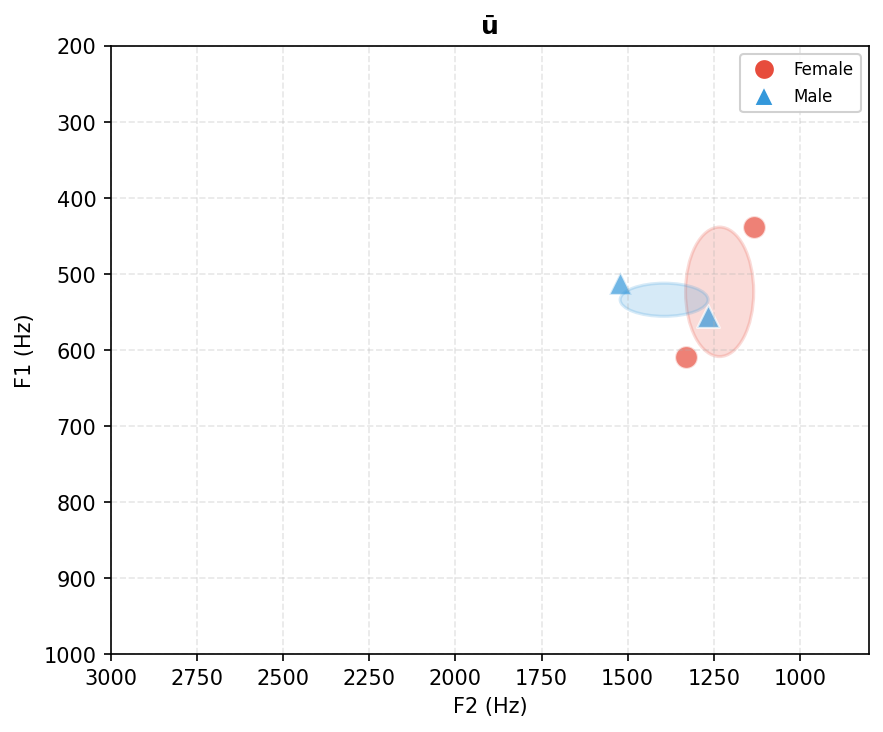
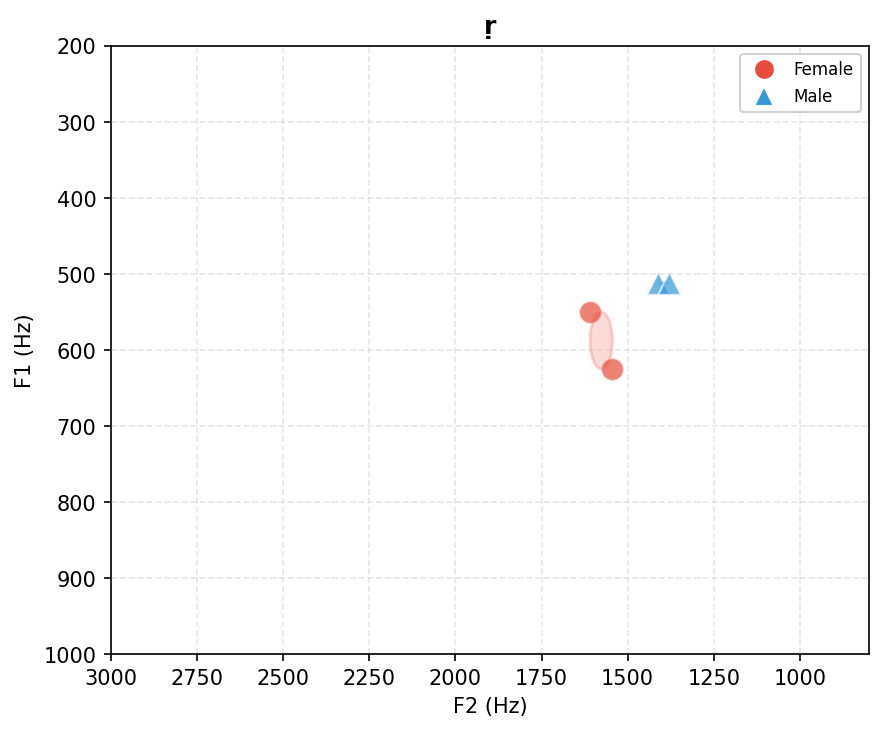
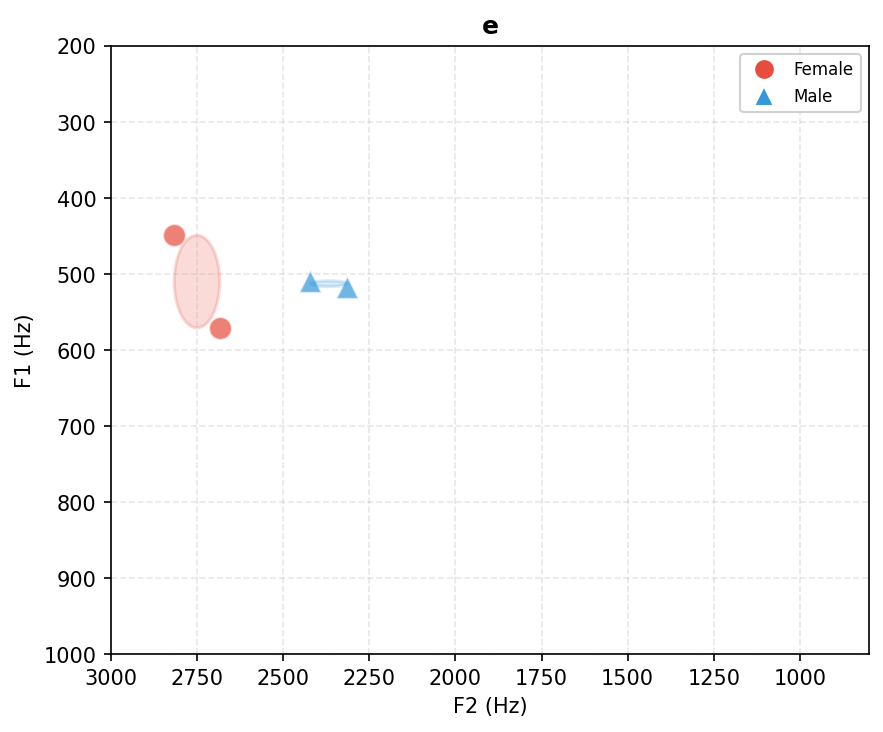
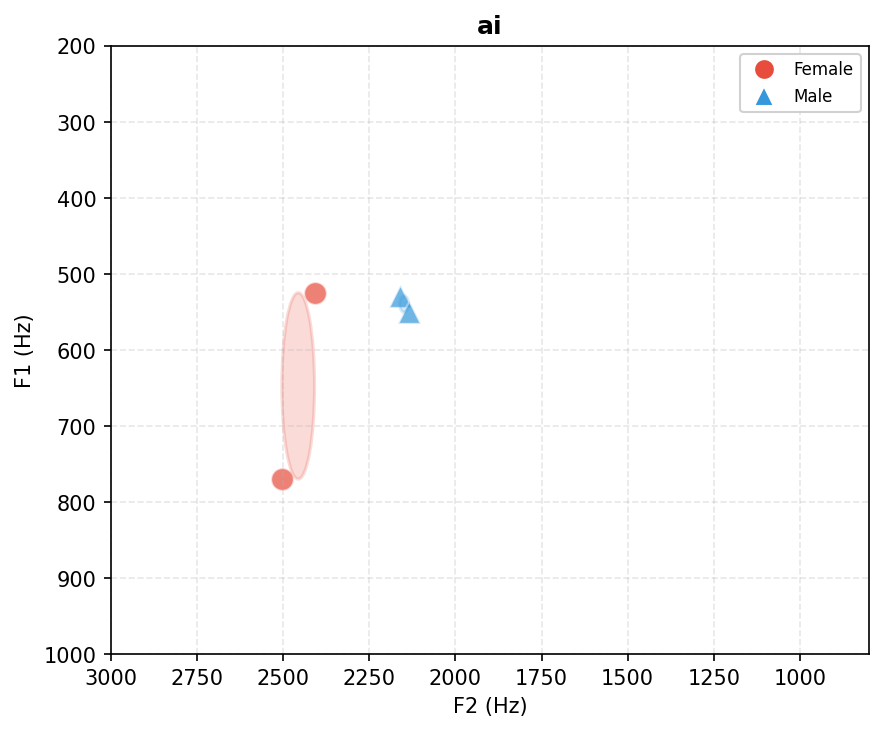
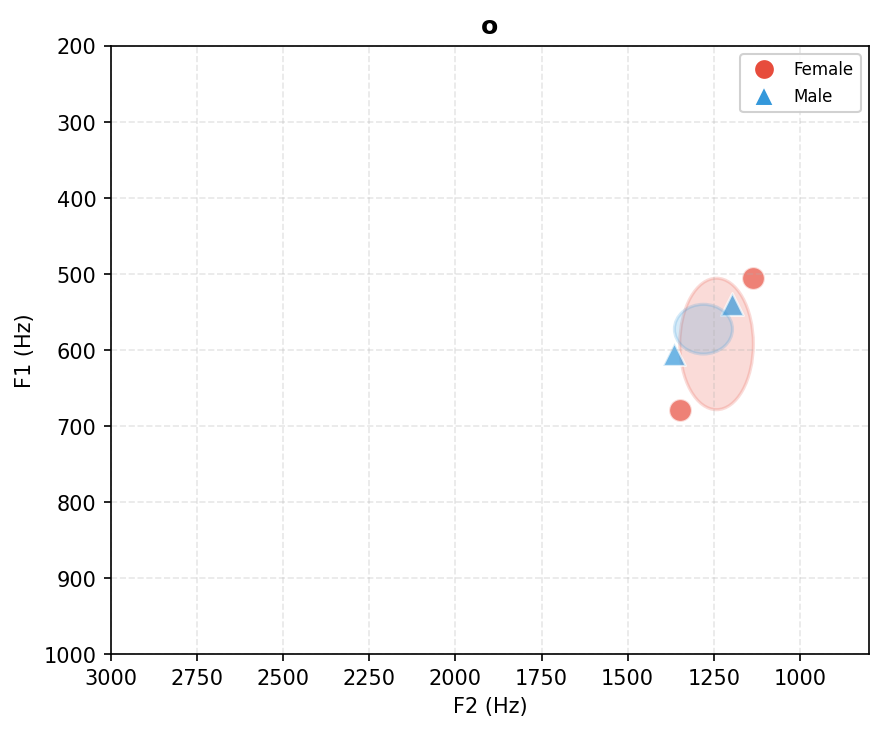
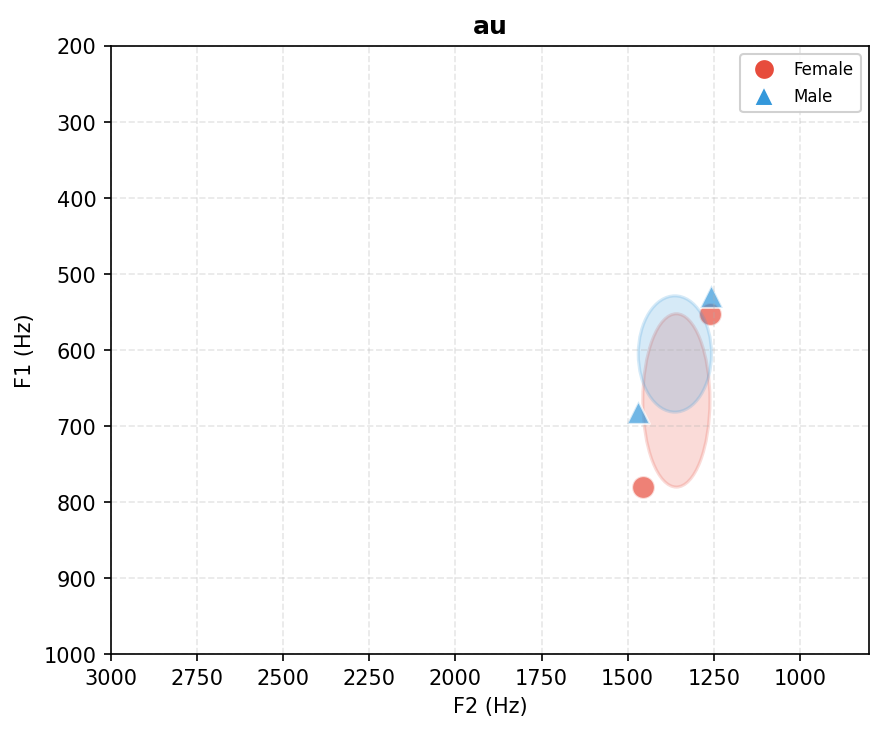
F1 vs F2 formant space for each primary vowel. Each point represents one utterance. Ellipses show ±1 standard deviation clusters.
a Formant Space
i Formant Space
u Formant Space

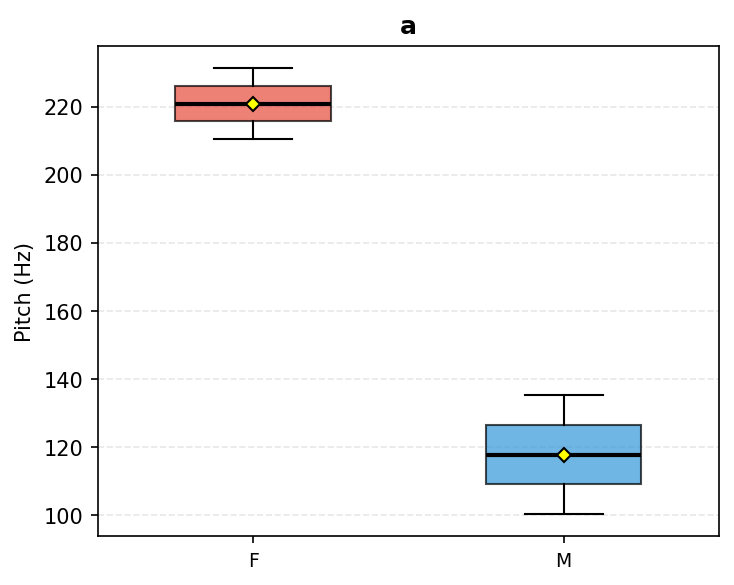
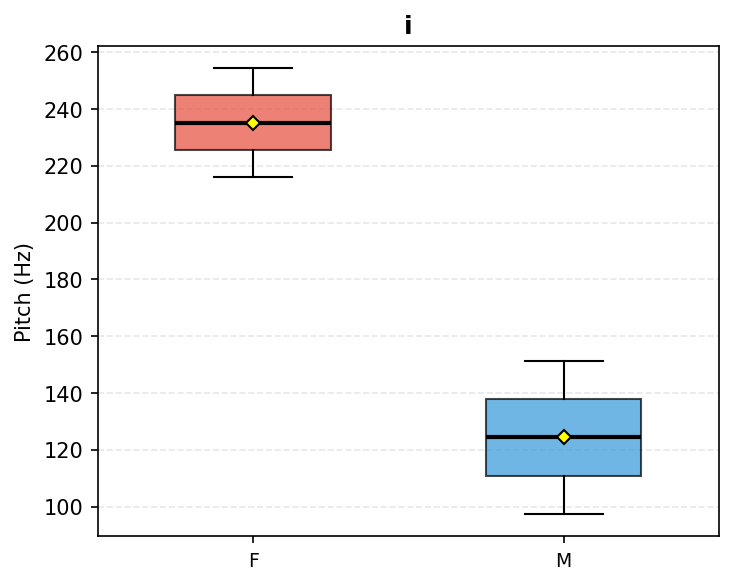
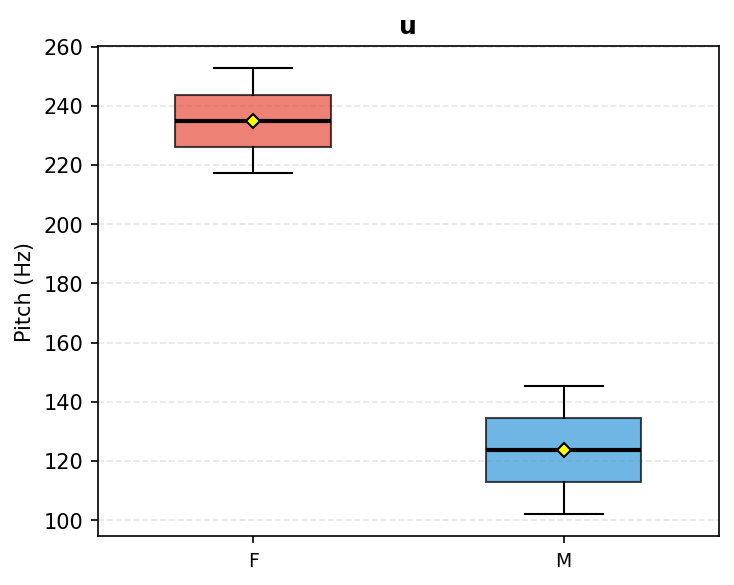
Pitch Distribution: Primary Vowels

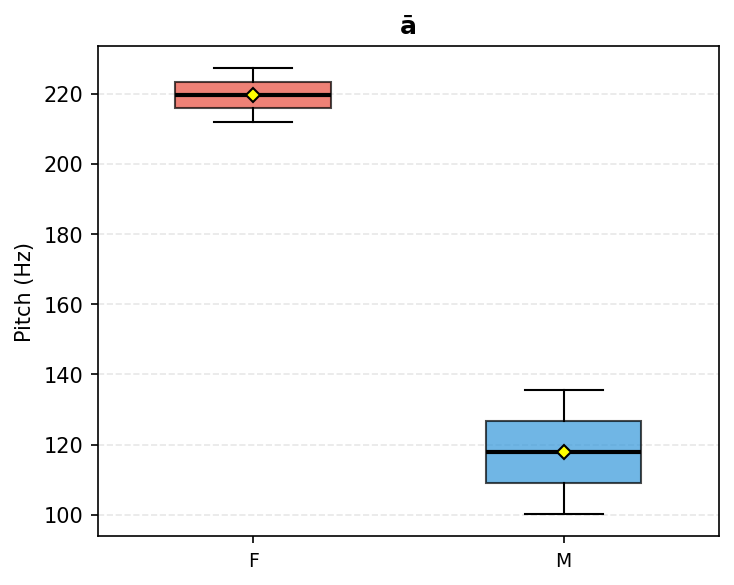
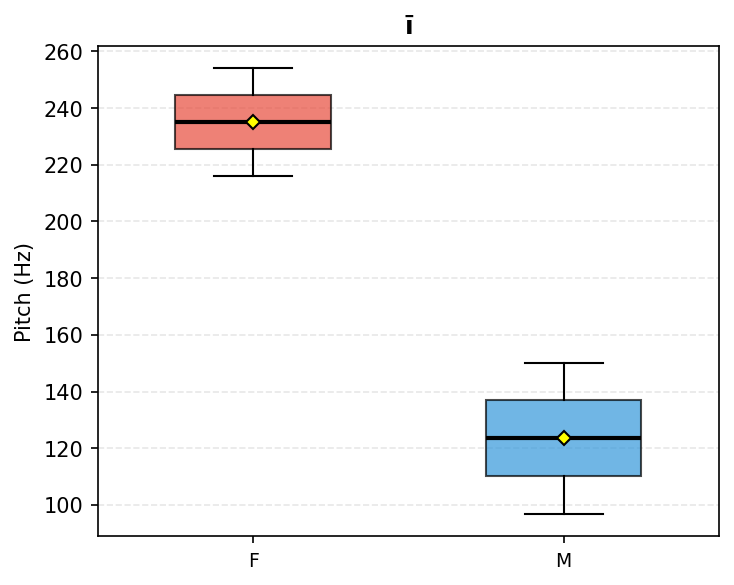
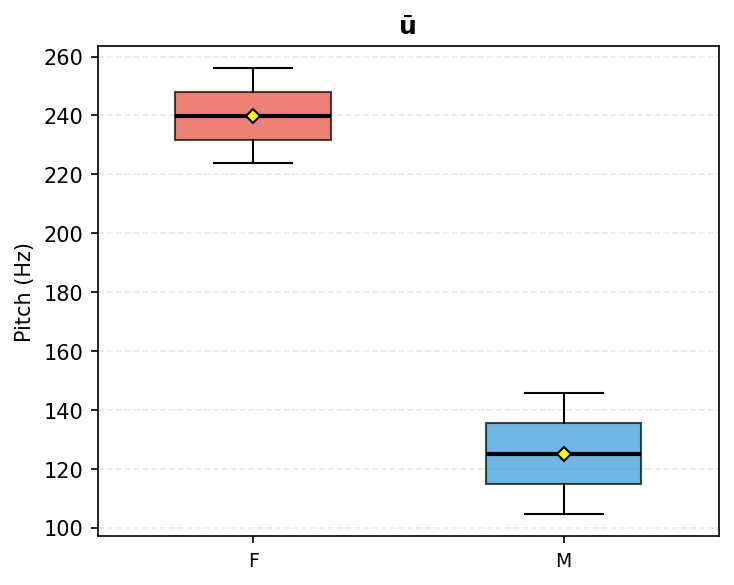
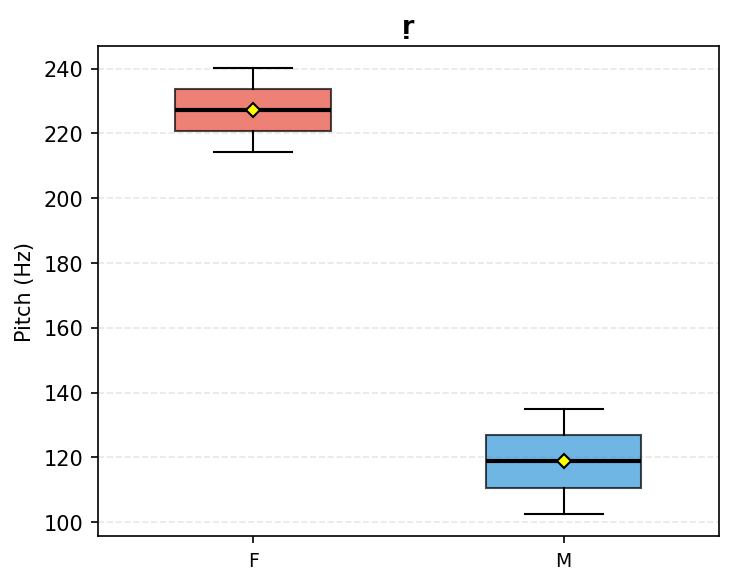
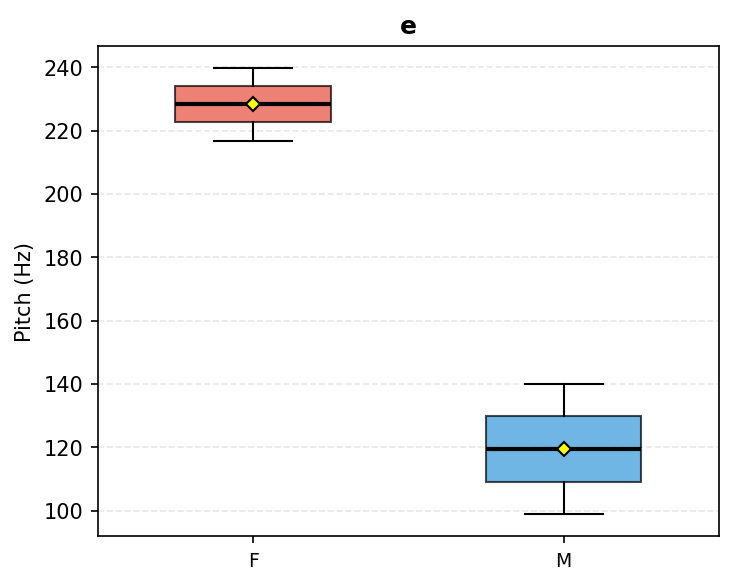
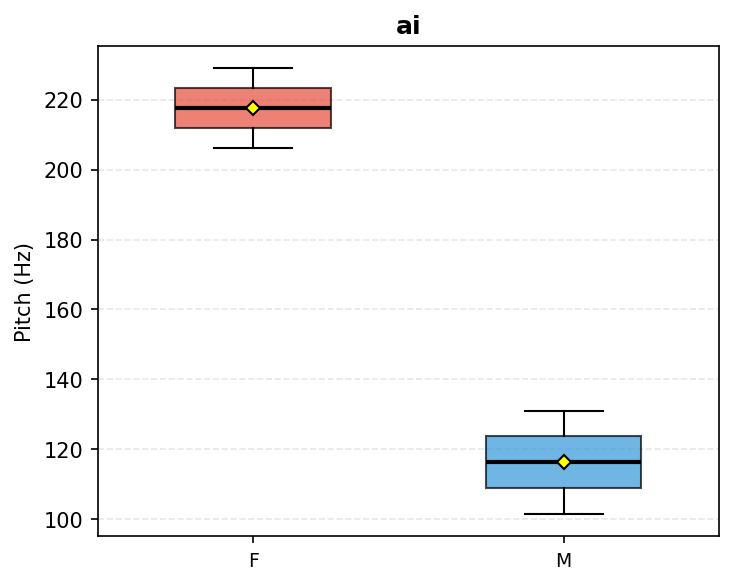
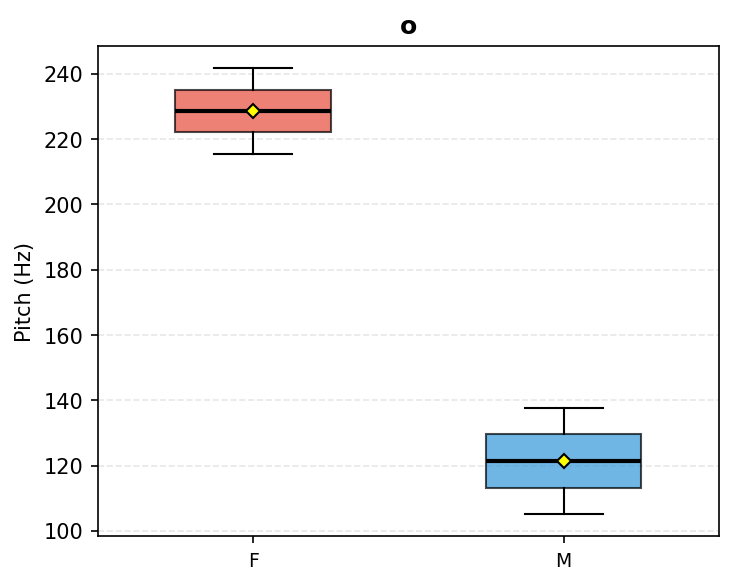
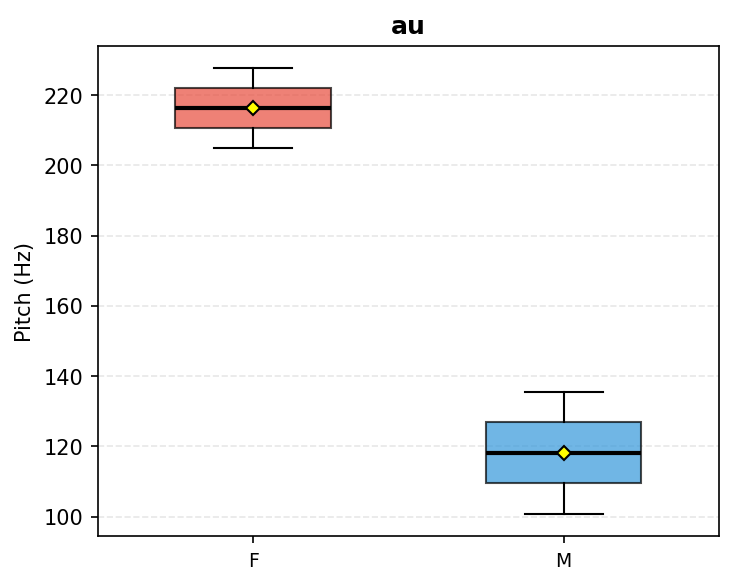
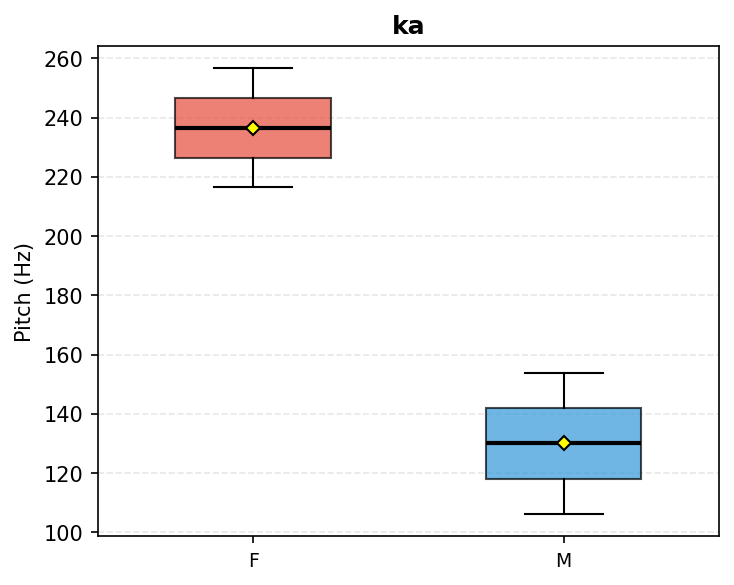
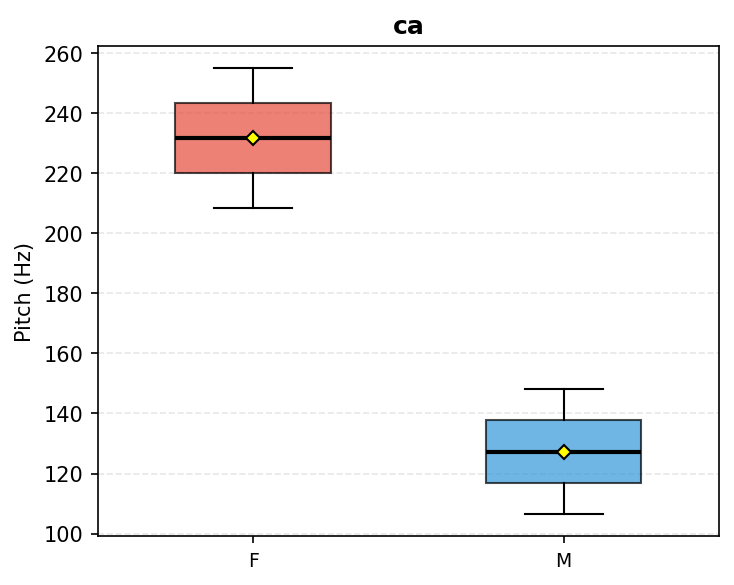
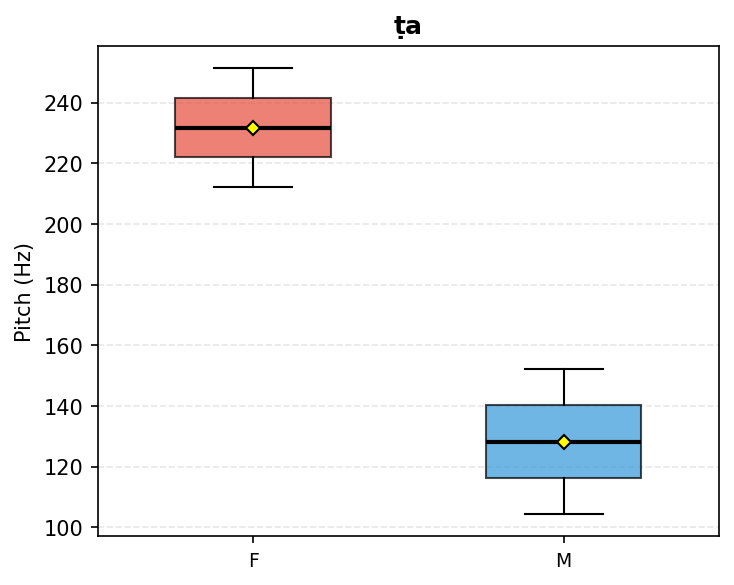
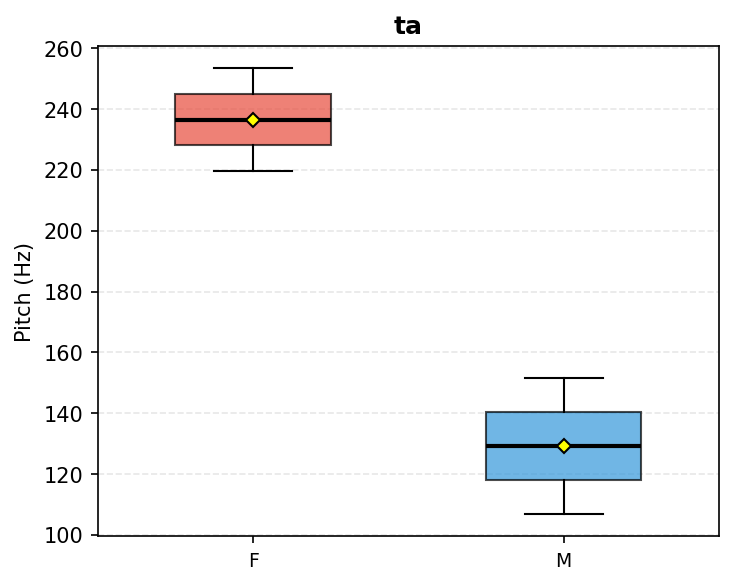
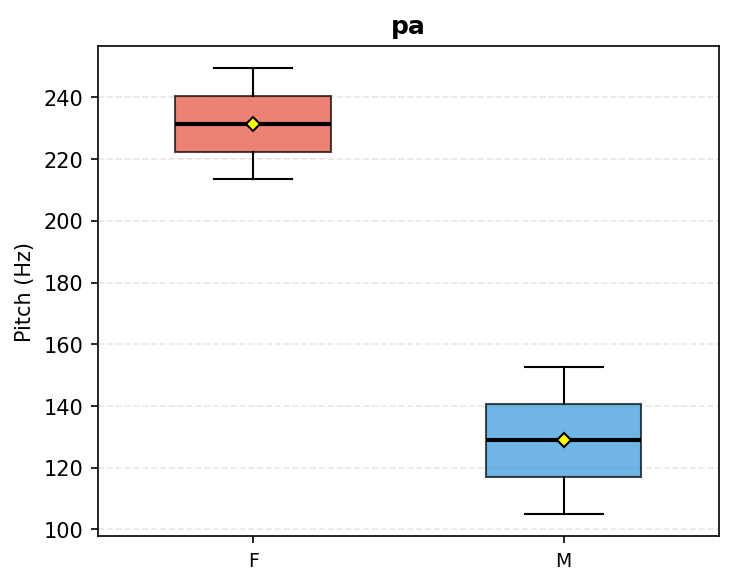
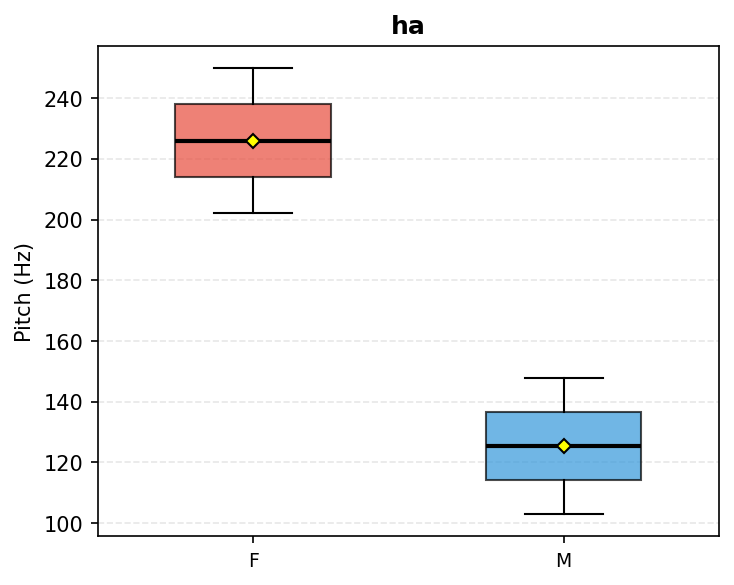
Pitch (F0) distribution by gender for each primary vowel. Box plots show median (black line), mean (yellow diamond), and quartiles.
a Pitch
i Pitch
u Pitch

Secondary Vowel Space

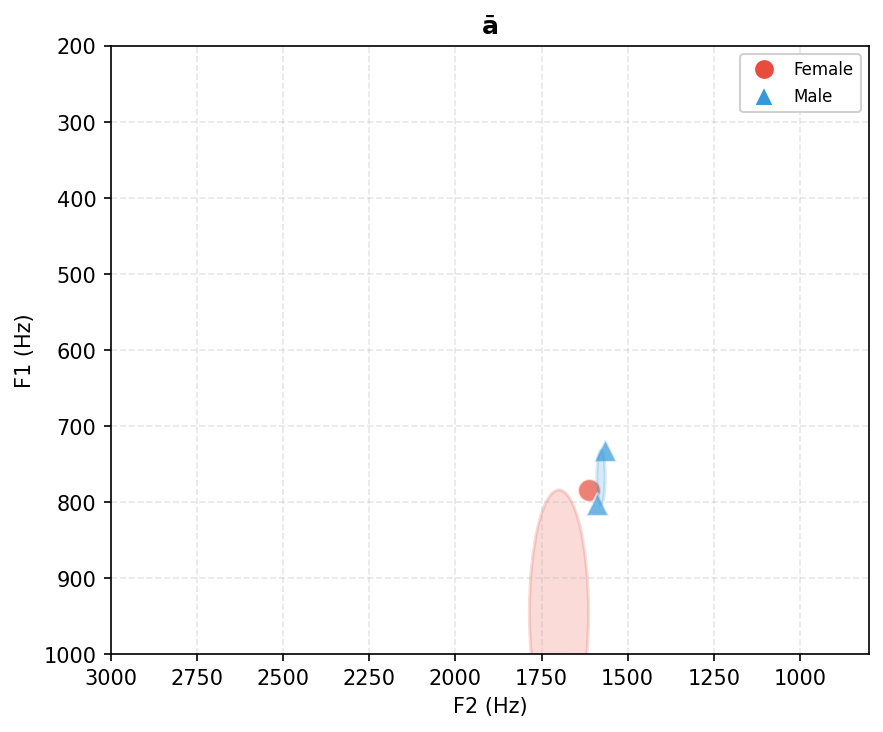
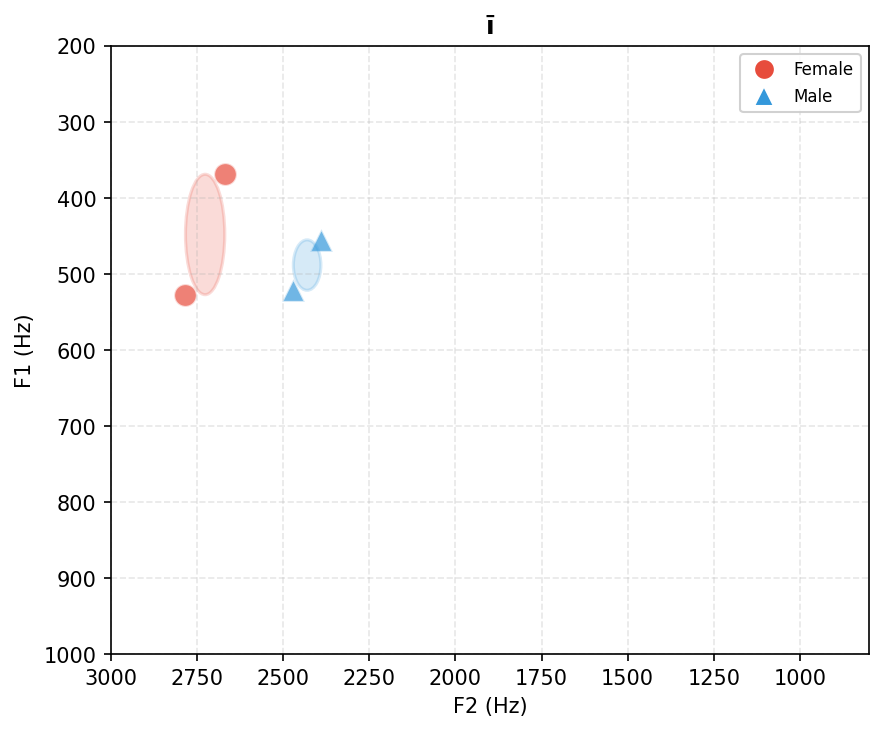
Extended vowel inventory: ā, ī, ū, e, ai, o, au, ṛ. Same F1/F2 formant space visualization as primary vowels.
ā Formant Space
ī Formant Space
ū Formant Space
ṛ Formant Space
e Formant Space
ai Formant Space
o Formant Space
au Formant Space

Pitch Distribution: Secondary Vowels

Pitch (F0) distribution by gender for each secondary vowel.
ā Pitch
ī Pitch
ū Pitch
ṛ Pitch
e Pitch
ai Pitch
o Pitch
au Pitch

Select Vyanjanas

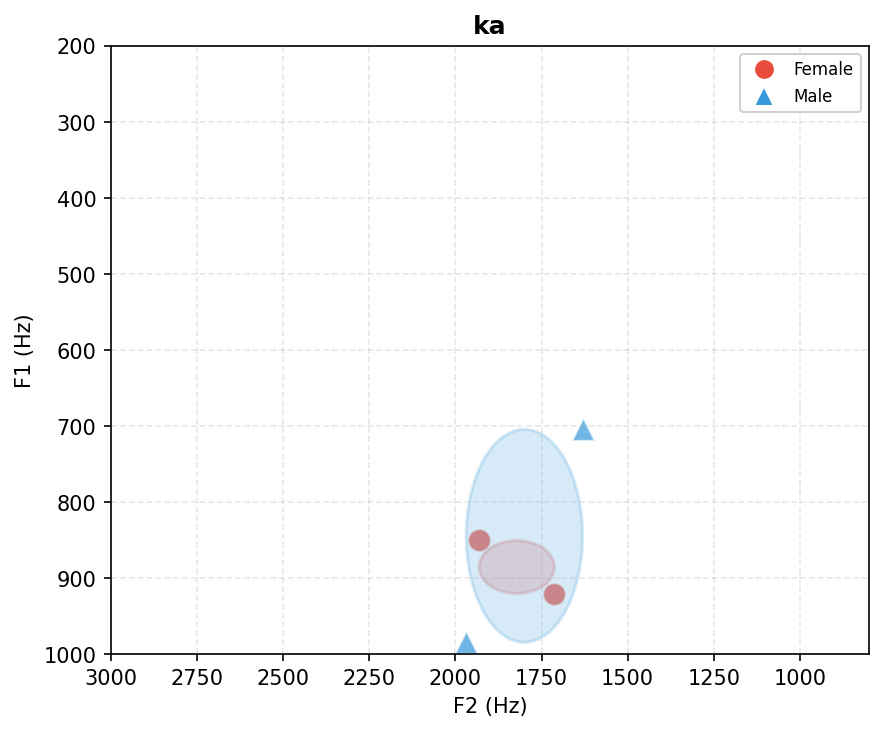
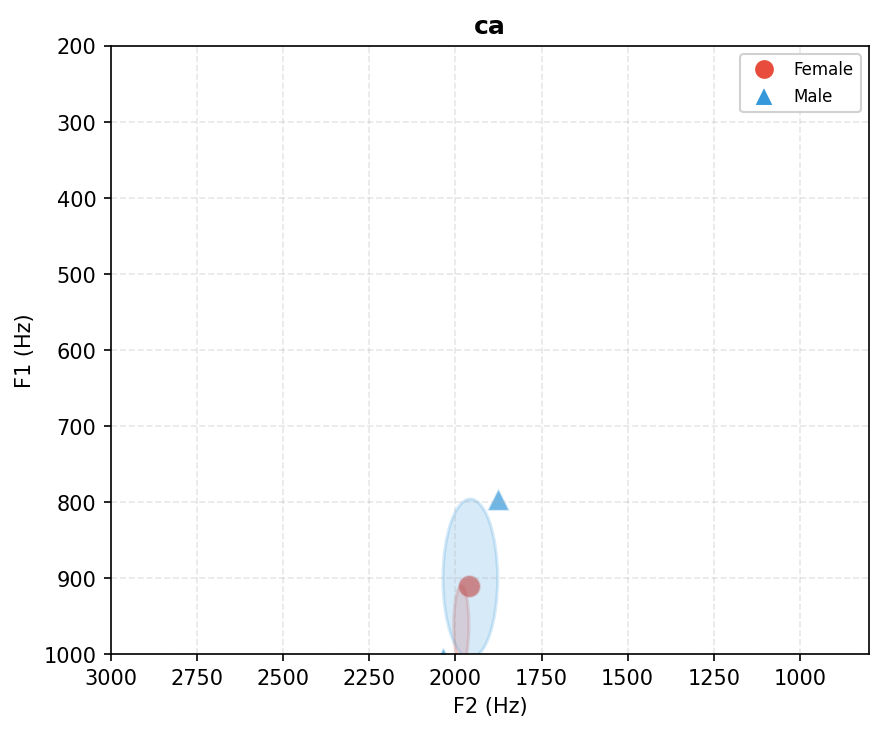
Articulatory variety: ka (velar), ca (palatal), ṭa (retroflex), ta (dental), pa (labial), ha (glottal), and ri, su (approximant/fricative). Formants reflect the inherent vowel component (a) or vowel context. These show consonantal acoustic properties and place-of-articulation distinctions.
ka Formant Space
ca Formant Space
ṭa Formant Space
ta Formant Space
pa Formant Space
ha Formant Space

Pitch Distribution: Vyanjanas

Pitch (F0) distribution by gender for select vyanjanas.
ka Pitch
ca Pitch
ṭa Pitch
ta Pitch
pa Pitch
ha Pitch